
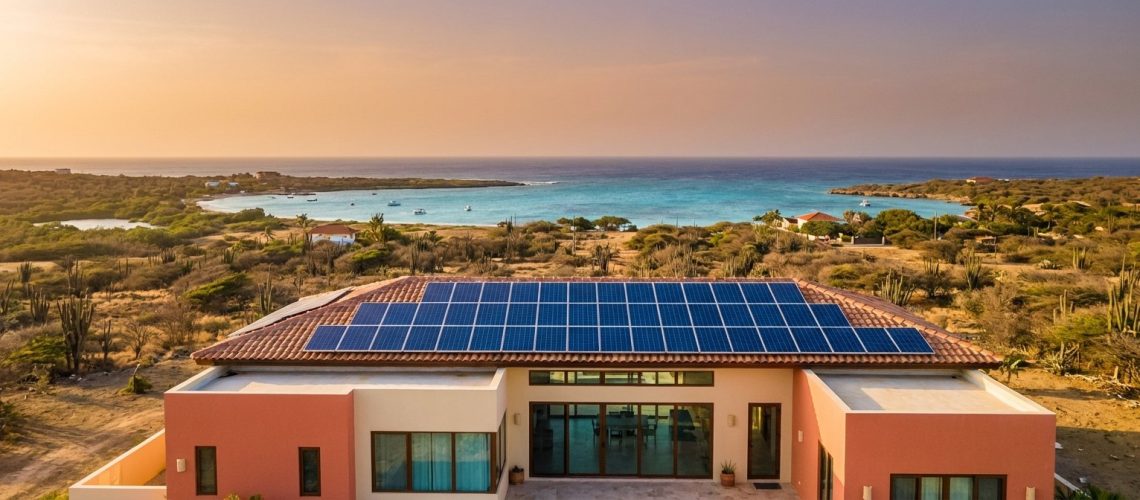
When electricity bills in Aruba regularly exceed $300 monthly for an average household, the conversation about solar energy savings becomes more than just environmental stewardship—it becomes a financial lifeline. Yet despite solar energy’s proven track record across the Caribbean, there are critical aspects of solar savings that rarely get discussed in sales pitches or marketing materials. Understanding these hidden truths can mean the difference between an average solar investment and one that transforms your financial future.
The Real Numbers Behind Solar Energy Savings
Solar energy savings in Aruba aren’t just theoretical—they’re measurable, substantial, and often surprising. The average Aruban household consuming 750-1000 kWh monthly faces electricity costs that can easily reach $3,600 to $4,800 annually. A properly sized solar system, typically 5-10 kWp for family homes, can eliminate 80-100% of these costs, depending on consumption patterns and system design.
What sales representatives often don’t emphasize is that your actual savings depend heavily on your consumption timing. Solar panels generate electricity when the sun shines, but your peak consumption might occur in the evenings when you’re running air conditioning and appliances. This timing mismatch affects your savings calculation significantly.
Here’s what actually happens: Without battery storage, you’re selling excess daytime solar production back to the grid at a lower rate than you purchase evening electricity. With strategic consumption shifts—running washing machines, dishwashers, and pool pumps during daylight hours—you maximize the value of every watt your system produces. This behavioral adjustment can increase your effective savings by 15-25%.
The Hidden Cost Recovery Timeline

The solar industry frequently promotes ROI timelines of 3-5 years, and in Aruba’s high-cost electricity environment, these numbers are achievable. However, several factors influence whether you’ll hit the shorter or longer end of that spectrum.
System quality matters tremendously. Coastal conditions demand robust materials and installation techniques. Panels and inverters built for Caribbean environments withstand salt air, intense UV exposure, and tropical weather patterns that would degrade inferior equipment within years. The initial price difference between standard and coastal-rated components might be $1,000-2,000, but the longevity difference could span decades.
Maintenance costs, though minimal, do exist. Annual system inspections and occasional panel cleaning ensure optimal performance. Budget approximately $100-200 annually for professional maintenance, or handle basic cleaning yourself with proper safety precautions. These costs are rarely included in initial savings calculations but affect your true ROI.
Another overlooked factor: electricity rate increases. Aruba’s electricity costs have historically risen 3-5% annually. Your solar system locks in your energy costs at installation prices, meaning your savings compound over time as grid electricity becomes progressively more expensive. By year ten, your annual savings could be 30-50% higher than year one, even if your consumption remains constant.
System Sizing Secrets That Impact Your Wallet
One critical truth about solar energy savings: bigger isn’t always better. Oversizing your system sounds appealing—generate more electricity, save more money, right? The reality is more nuanced.
Aruba’s net metering policies and grid connection regulations influence optimal system sizing. Installing capacity far beyond your typical consumption means selling excess production back to the utility at rates substantially lower than retail electricity prices. You’re essentially generating money at 50-60 cents per kWh when you could be saving dollars.
The sweet spot for most residential installations is 100-110% of annual consumption. This accounts for consumption growth, system degradation over time, and seasonal variations while avoiding significant excess production that delivers diminished returns. A professional energy audit reveals your actual usage patterns, not just your average bill amount, enabling precise system sizing that maximizes financial performance.
Commercial installations follow different logic. Businesses with consistent daytime operations—restaurants, retail shops, offices—see exceptional solar savings because their consumption aligns perfectly with solar production hours. A 20-50 kWp commercial system can deliver ROI in under four years when consumption and production synchronize effectively.
The Battery Storage Investment Decision
Battery storage represents solar energy’s biggest unspoken dilemma. Marketing materials often present batteries as essential components, but the financial reality requires careful analysis.
Adding battery storage to a residential solar system increases upfront costs by $5,000-15,000, depending on capacity. These batteries enable energy independence, backup power during outages, and maximum utilization of solar production. However, they also extend your payback period by 2-4 years in most scenarios.
For households experiencing frequent grid interruptions or running essential medical equipment, batteries deliver value beyond pure financial calculations. For others, the extended ROI timeline makes batteries a luxury rather than necessity. The decision hinges on your priorities: fastest financial return versus maximum energy independence.
Battery technology continues advancing rapidly. Prices decline while capacity and longevity improve. Many Aruba residents install solar systems with battery-ready inverters, adding storage later when prices drop further or when accumulated electricity savings fund the battery investment without additional out-of-pocket expense.
Tax Incentives and Financing Realities
Aruba’s solar incentive landscape differs significantly from markets like the United States or Europe. Currently, no substantial government rebates or tax credits reduce upfront solar installation costs. This absence of incentives means your savings come purely from eliminated electricity bills and system longevity—actually simplifying ROI calculations.
Financing options significantly impact your cash flow and overall savings. Paying cash delivers the fastest ROI and maximum lifetime savings. Solar loans spread costs over time but add interest expenses that reduce total savings by 15-30%, depending on terms and rates.
Here’s a calculation rarely presented clearly: A $12,000 solar system financed at 6% interest over seven years costs approximately $14,400 total. If that system saves $250 monthly in electricity costs, you’re cash-flow positive from month one—your loan payment is less than your previous electricity bill. However, your true savings don’t begin until loan payoff, making your effective ROI timeline 7+ years rather than the 3-5 years advertised for cash purchases.
Performance Degradation and Long-Term Value

Solar panels don’t maintain 100% efficiency for thirty years—they gradually degrade. Quality panels lose approximately 0.3-0.5% efficiency annually, meaning a system producing 1,000 kWh monthly in year one might produce 900-920 kWh monthly by year twenty.
This degradation is factored into quality manufacturers’ warranties but rarely explained in savings projections. Your actual year-twenty savings will be 8-10% lower than year-one savings, assuming consistent electricity rates and consumption. However, because electricity rates typically increase faster than panels degrade, your dollar savings often continue growing despite declining panel efficiency.
Inverter replacement represents another hidden long-term cost. While panels last 25-30 years, inverters typically require replacement after 10-15 years at a cost of $1,500-3,000. This expense should factor into lifetime savings calculations. Over a 25-year system lifespan, you’ll likely replace your inverter once, effectively adding 5-8% to your total system cost.
The Community and Environmental Returns
Financial savings tell only part of the solar story. Every kilowatt-hour your system produces reduces Aruba’s dependence on imported fossil fuels, strengthening the island’s energy security and economic resilience. This collective impact creates community-wide benefits that individual savings calculations can’t capture.
A typical 7 kWp residential system offsets approximately 4-5 tons of CO2 emissions annually—equivalent to planting 100+ trees or removing a car from the road for six months. Over twenty-five years, that single residential installation prevents 100+ tons of carbon emissions while saving the homeowner $75,000-100,000 in electricity costs.
These environmental returns extend beyond carbon calculations. Reduced fossil fuel consumption means cleaner air, less pollution in Caribbean waters, and preserved natural beauty that sustains Aruba’s tourism economy and quality of life. Solar adopters become sustainability leaders, inspiring neighbors and accelerating the island’s renewable energy transition.
Frequently Asked Questions
Do you actually save money going solar?
Yes, solar energy savings in Aruba are substantial and measurable. With electricity costs among the Caribbean’s highest, properly sized solar systems typically deliver 3-5 year ROI, followed by 20+ years of dramatically reduced electricity bills. Total lifetime savings range from $60,000-150,000 depending on system size and consumption patterns. The key is accurate system sizing, quality components rated for coastal conditions, and strategic consumption timing to maximize self-use of solar production.
What is the 33% rule in solar panels?
The 33% rule suggests that your monthly solar loan or lease payment shouldn’t exceed 33% of your average monthly electricity bill to maintain cash-flow positivity. In Aruba’s context, this means if your monthly electricity bill averages $300, your solar financing payment should remain under $100 monthly. However, with Aruba’s high electricity costs, many solar installations deliver savings exceeding this conservative threshold, with financing payments often 50-70% of previous electricity costs.
What is the solar 120% rule?
The solar 120% rule is a safety regulation stating that solar system breakers and existing electrical panel ratings combined cannot exceed 120% of the panel’s busbar rating. This electrical code requirement prevents overloading your home’s electrical infrastructure. For Aruba homeowners, this means your existing electrical panel capacity influences maximum solar system size. Some homes require panel upgrades to accommodate desired solar capacity, adding $800-1,500 to installation costs.
How much will solar reduce my electric bill?
Solar energy savings in Aruba typically reduce electricity bills by 80-100% for properly sized systems. A household currently paying $300 monthly can expect bills of $0-60 monthly post-solar, depending on system size, consumption patterns, and whether battery storage is included. Businesses with daytime operations often achieve 90-100% bill reduction because their consumption aligns with solar production hours. The exact reduction depends on system size relative to consumption, time-of-use patterns, and how effectively you shift discretionary loads to daylight hours.
Making Solar Savings Work For Your Situation
Solar energy savings in Aruba deliver genuine financial returns, but maximizing those returns requires understanding the complete picture—not just the optimistic projections. The most successful solar adopters approach their installation as a long-term investment, carefully considering system sizing, component quality, financing options, and consumption patterns.
Start with a professional energy audit that analyzes your actual consumption timing, not just total usage. This reveals whether your household or business naturally aligns with solar production hours or requires behavioral adjustments to maximize savings. Understanding your consumption profile enables precise system sizing that optimizes financial performance.
Prioritize quality over price when comparing installation quotes. hurricane-resistant-solar-panels-what-aruba-property-owners-need-to-know-in-2026/”>Coastal-rated components and professional installation techniques appropriate for Caribbean conditions deliver decades of reliable performance, while budget installations often require expensive repairs or premature replacement.
Consider the total ownership timeline. Yes, upfront costs seem substantial—$10,000-25,000 for residential systems—but spread those costs across twenty-five years of energy production. You’re paying roughly $400-1,000 annually for electricity over that period, compared to $3,600-4,800 annually from the grid. The long-term mathematics overwhelmingly favor solar investment.
Solar energy savings represent more than personal financial benefits. Every installation strengthens Aruba’s energy independence, reduces environmental impact, and demonstrates sustainable living for the broader community. You’re not just lowering your electricity bill—you’re contributing to a cleaner, more resilient Caribbean energy future.
Ready to discover your specific solar savings potential? Contact B-Energy for a personalized assessment that reveals exactly how solar energy can transform your electricity costs while contributing to Aruba’s sustainable energy revolution. Your journey toward energy independence and substantial long-term savings begins with understanding the complete picture—the benefits, the considerations, and the remarkable financial returns that solar energy delivers in the Caribbean’s unique environment.