
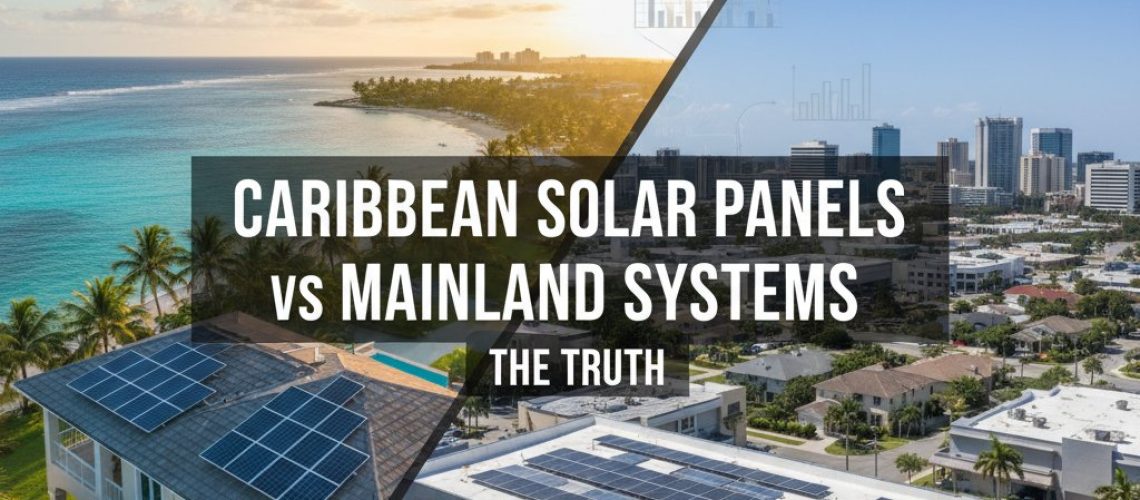
Picture two solar installations: one gleaming under the intense Caribbean sun in Aruba, another mounted on a residential roof in temperate North America. They look similar, but are they truly the same? The answer reveals why island residents need specialized solar solutions designed for tropical excellence—and why this distinction matters for your investment, energy independence, and the sustainable future of Caribbean communities.
The truth is that Caribbean solar panels face challenges mainland systems never encounter, and understanding these differences empowers you to make informed decisions that protect your investment while contributing to your island’s energy transformation.
Why Location Transforms Solar Technology Requirements
Solar energy works everywhere the sun shines, but the operating environment dramatically affects system performance, longevity, and return on investment. Caribbean installations operate in conditions that would stress standard mainland equipment to its limits.
The islands present a unique combination of environmental factors: unrelenting UV exposure near the equator, salt-laden ocean breezes, humidity levels that regularly exceed 80%, and temperatures that create thermal cycling unknown in moderate climates. These aren’t minor considerations—they’re fundamental design parameters that separate adequate solar equipment from exceptional Caribbean-proven systems.
Mainland solar panels typically experience gentler conditions with seasonal variation that allows equipment to “rest” during cooler months. Caribbean solar panels work year-round under maximum intensity without reprieve, making equipment quality and tropical-specific engineering absolutely essential.
The Salt Air Reality: Coastal Corrosion Considerations
Perhaps no factor distinguishes Caribbean solar installations more dramatically than constant salt exposure. Ocean spray carries sodium chloride particles that settle on every surface, creating corrosive conditions that accelerate degradation of improperly specified equipment.
Standard aluminum frames and mounting hardware suitable for mainland installations can develop corrosion within months when exposed to Caribbean coastal environments. This isn’t theoretical—it’s the documented experience of early island installations that used conventional equipment.
Marine-Grade Components Make the Difference
Quality tropical solar equipment incorporates several protective features:
- Anodized aluminum frames with enhanced coating thickness to resist salt penetration
- Stainless steel mounting hardware (316 marine-grade preferred) that withstands decades of exposure
- Junction boxes with superior sealing to prevent moisture infiltration
- UV-resistant cable insulation that won’t crack under intense tropical sun
- Inverters with conformal coating on circuit boards to prevent corrosion
These specifications aren’t luxuries—they’re necessities that determine whether your solar investment delivers the promised 25-30 year performance or requires expensive premature replacement. The initial cost difference between standard and marine-grade components typically represents less than 5% of total system cost, yet determines whether you achieve the expected 3-5 year return on investment or face disappointing results.
Temperature Coefficients: How Heat Affects Performance
Here’s a reality that surprises many Caribbean residents: solar panels actually lose efficiency as they get hotter. This temperature coefficient becomes critically important in tropical installations where panel temperatures routinely exceed 65°C (149°F) under full sun—significantly hotter than mainland systems experience.
Standard polycrystalline panels might lose 0.45% efficiency for every degree Celsius above 25°C. In Caribbean conditions, this translates to 18% efficiency loss during peak production hours. Premium monocrystalline panels with low temperature coefficients (around 0.35% per degree) recover much of this loss, generating substantially more electricity over the system’s lifetime.
For a typical 10 kWp residential system in Aruba, choosing panels with superior temperature coefficients can mean an additional 2,000-3,000 kWh of annual production—enough to power a home for several months. That difference directly impacts your electricity bill savings and accelerates your path to energy independence.
Bifacial Technology: Capturing Caribbean Brightness
The intense Caribbean sun creates another opportunity unavailable to many mainland installations: reflected light from bright surfaces below solar arrays. Bifacial panels capture sunlight from both sides, harvesting reflected photons from white roofs, light-colored ground cover, or even the brilliant turquoise waters surrounding island installations.
In tropical environments with high ambient brightness, bifacial technology can increase energy capture by 10-20% compared to traditional monofacial panels—a significant advantage that helps Caribbean systems outperform their rated capacity and deliver exceptional returns.
Inverter Selection: The Brain of Your Solar System
While panels capture attention, inverters determine system reliability and longevity. These electronic components convert DC electricity from panels into AC power for your home or business, working continuously in challenging conditions.
Mainland inverters installed in air-conditioned utility rooms face minimal environmental stress. Caribbean inverters—whether string inverters in outdoor enclosures or microinverters mounted beneath panels—endure extreme conditions that test every component.
Tropical-Rated Inverter Specifications
Quality solar installations in Aruba and throughout the Caribbean require inverters with enhanced environmental ratings:
- IP65 or higher ingress protection: Complete dust sealing and protection against water jets from any direction
- Extended operating temperature range: Reliable function from -25°C to +60°C or higher
- Conformal coating: Circuit board protection against humidity and salt intrusion
- Advanced thermal management: Efficient cooling systems that maintain optimal component temperatures
European and North American inverter manufacturers increasingly offer “tropical” or “coastal” rated models specifically engineered for island conditions. These specialized products recognize that Caribbean solar installations demand superior protection, and experienced installers specify them as standard equipment rather than optional upgrades.
Wind Loading and Structural Engineering Differences
While Aruba sits outside the primary hurricane belt—a tremendous advantage for reliable solar installations—proper structural engineering remains essential. Caribbean trade winds regularly exceed 40 km/h, creating sustained loads that require robust mounting systems.
Mainland solar installations in low-wind areas might use lighter-duty mounting rails and fewer attachment points. Island installations require reinforced structures with redundant fastening, engineered to withstand decades of constant wind stress without loosening or developing leaks.
This structural integrity protects both your investment and your property. Properly engineered Caribbean solar systems become permanent building improvements that enhance property value and provide reliable energy for decades, while inadequately secured systems risk damage, leaks, and disappointing performance.
System Sizing: Matching Capacity to Caribbean Energy Needs
High electricity costs throughout the Caribbean—often 2-4 times mainland rates—make solar economics extraordinarily attractive. A residential system that might offer modest savings in North America delivers transformative financial benefits in Aruba, where electricity prices create urgent motivation for energy independence.
Typical residential installations range from 5-15 kWp, sized to offset most or all household consumption. Commercial properties often install 20-100+ kWp systems that dramatically reduce operating costs while demonstrating environmental leadership to customers and community.
The Caribbean Advantage: Superior Solar Economics
Consider this comparison: A 10 kWp system in the Caribbean typically produces 14,000-16,000 kWh annually thanks to consistent tropical sun. With electricity costs around $0.40/kWh in many island markets, that system saves $5,600-6,400 annually—delivering complete return on investment in 3-5 years for most installations.
Compare this to mainland locations with lower electricity rates ($0.12-0.15/kWh) and less consistent solar exposure, where payback periods often extend to 8-12 years. The Caribbean’s combination of abundant sunshine and high utility rates creates perhaps the world’s most favorable solar economics.
This financial reality explains why solar adoption throughout Caribbean islands continues accelerating. Residents and business owners recognize that proper investment in quality tropical solar equipment pays for itself quickly while providing decades of virtually free electricity—true energy independence that protects against future utility rate increases.
Maintenance Considerations: Keeping Systems at Peak Performance
Caribbean solar panels require more frequent attention than mainland systems, primarily due to salt accumulation and tropical dust that can reduce output by 5-10% if left unaddressed. However, this maintenance remains simple and inexpensive.
Quarterly cleaning with deionized water removes salt deposits and restores full production. Many Caribbean solar owners schedule cleaning to coincide with seasonal weather patterns, maintaining optimal performance year-round. Some commercial installations invest in automated cleaning systems that ensure consistent output without manual intervention.
Quality tropical-rated equipment minimizes other maintenance requirements. Properly specified components resist corrosion, maintain electrical connections, and function reliably for decades with minimal attention—proving that initial investment in Caribbean-appropriate equipment pays ongoing dividends.
Net Metering and Grid Integration in Island Markets
Caribbean solar installations benefit from evolving net metering policies that allow excess production to offset future consumption. These programs recognize solar’s contribution to grid stability and reduced fossil fuel imports—critical considerations for island economies.
Modern inverters provide grid-support functions that help stabilize island electrical systems, including voltage regulation and frequency support. These capabilities make distributed solar increasingly valuable to utilities managing isolated island grids with limited generation diversity.
As Caribbean governments advance renewable energy targets—many aiming for 30-50% renewable generation by 2030—solar installations become community assets that contribute to collective energy independence. Your solar system doesn’t just save money; it helps build the sustainable energy infrastructure that benefits all island residents.
Warranty Protection: Ensuring Long-Term Performance
Premium solar panels carry 25-30 year performance warranties guaranteeing 80-85% of original output after decades of operation. However, these warranties only deliver value if manufacturers honor them for Caribbean installations.
Reputable solar equipment suppliers explicitly cover tropical coastal installations, recognizing that properly rated equipment performs reliably in island conditions. Before finalizing your solar investment, verify that warranty terms fully protect Caribbean applications and that your installer maintains manufacturer certification ensuring warranty validity.
This warranty security provides peace of mind that your investment remains protected throughout its operating life—another advantage of working with experienced Caribbean solar professionals who understand equipment specifications and maintain manufacturer relationships.
The Community Impact: Beyond Individual Benefits
Every Caribbean solar installation contributes to broader community transformation. Reduced fossil fuel consumption means cleaner air, lower carbon emissions, and decreased dependence on imported energy that drains island economies.
As solar adoption increases, Caribbean communities build technical expertise, create local jobs, and develop sustainable infrastructure that attracts environmentally conscious visitors and businesses. Your solar decision participates in this larger movement toward energy sovereignty and environmental stewardship.
This community dimension elevates solar from simple financial decision to meaningful contribution toward Caribbean sustainability. You’re not just reducing your electricity bill—you’re helping build the clean energy future that ensures island prosperity for coming generations.
Making the Right Choice: Caribbean-Specific Solar Excellence
The truth about Caribbean solar panels versus mainland systems comes down to this: while the fundamental technology remains the same, proper tropical implementation requires specialized equipment, experienced engineering, and commitment to quality that recognizes island conditions.
Standard mainland solar equipment can function in Caribbean environments, but optimized tropical-rated systems deliver superior performance, reliability, and longevity that justify modest additional investment. This quality focus ensures you achieve the promised 3-5 year ROI while enjoying decades of virtually free electricity.
The Caribbean’s exceptional solar resource—consistent year-round sunshine combined with high electricity costs—creates extraordinary opportunity for residents and businesses ready to embrace energy independence. Proper equipment selection and professional installation transform this opportunity into reliable reality.
Your Path to Caribbean Energy Independence
Understanding the differences between Caribbean solar panels and mainland systems empowers you to ask the right questions and make informed decisions. Seek installers with documented Caribbean experience, verify equipment specifications meet tropical requirements, and confirm warranty coverage for coastal installations.
The solar revolution transforming Caribbean communities isn’t coming—it’s happening now, installation by installation, as island residents and businesses claim their energy independence. Your participation in this movement delivers immediate financial benefits while contributing to the sustainable, self-sufficient Caribbean future we’re building together.
Ready to explore how properly specified tropical solar equipment can transform your energy costs while contributing to Aruba’s sustainable future? Connect with experienced Caribbean solar professionals who understand island conditions and specify quality equipment designed for decades of reliable tropical performance. Your journey to energy independence and community contribution starts with a single conversation about Caribbean-appropriate solar solutions.