Here’s something most solar installers won’t tell you upfront: a solar system in Aruba faces conditions that don’t exist in most of the world. The combination of relentless sun, sea breeze, and salt-laden air creates a unique environment where proper maintenance isn’t just helpful — it’s essential to protecting your investment and maximizing every kilowatt your panels produce.
The good news? With the right care routine, solar panels in Aruba’s coastal environment can perform beautifully for 25 years or more. Understanding what threatens that performance — and how to prevent it — is the difference between a system that pays for itself in 3-5 years and one that quietly loses efficiency year after year.
Why Salt Air Is a Unique Challenge for Solar Panels
Salt air corrosion on solar panels is a real and measurable problem in coastal environments. When salt particles from the sea settle on panel surfaces, frames, mounting hardware, and electrical connections, they accelerate oxidation and create a filmy residue that scatters and blocks incoming sunlight.
According to research published through the National Renewable Energy Laboratory (NREL), soiling and environmental contamination can reduce solar panel output by 7% to 25% depending on location and cleaning frequency. In a salt-rich tropical environment like Aruba, where panels are working hard every single day, even a 10% efficiency drop translates directly into higher electricity bills and a longer payback period.
The challenge isn’t just surface dirt. Salt air corrosion targets:
- Aluminum frames — oxidation weakens structural integrity over time
- Mounting hardware and fasteners — corrosion can loosen connections
- Junction boxes and electrical connectors — salt infiltration increases resistance and risk
- Inverter housing and outdoor electrical components — exposure accelerates wear
Understanding this helps shift maintenance from a chore into something more meaningful — an act of stewardship over an investment that benefits your family, your business, and your community’s energy future.
How Often Should You Clean Solar Panels in Aruba?
The right Caribbean solar maintenance schedule depends on your location, system size, and how close you are to the coastline. As a general guideline for Aruba solar panel cleaning:
- Coastal properties (within 1 km of the sea): Clean every 4-6 weeks
- Inland properties: Clean every 6-8 weeks
- Post-Saharan dust event: Clean within a few days — dust carried across the Atlantic creates a thick layer that can significantly reduce output
- After prolonged dry spells: Salt and dust buildup accelerates without rain to rinse panels naturally
Aruba’s trade winds, while refreshing, are constantly carrying microscopic salt particles. Unlike regions with frequent heavy rain to rinse panels clean, Aruba’s dry climate means natural cleaning is limited. A proactive solar maintenance schedule in the Caribbean is essential, not optional.
The Right Way to Clean Solar Panels in Tropical Climates
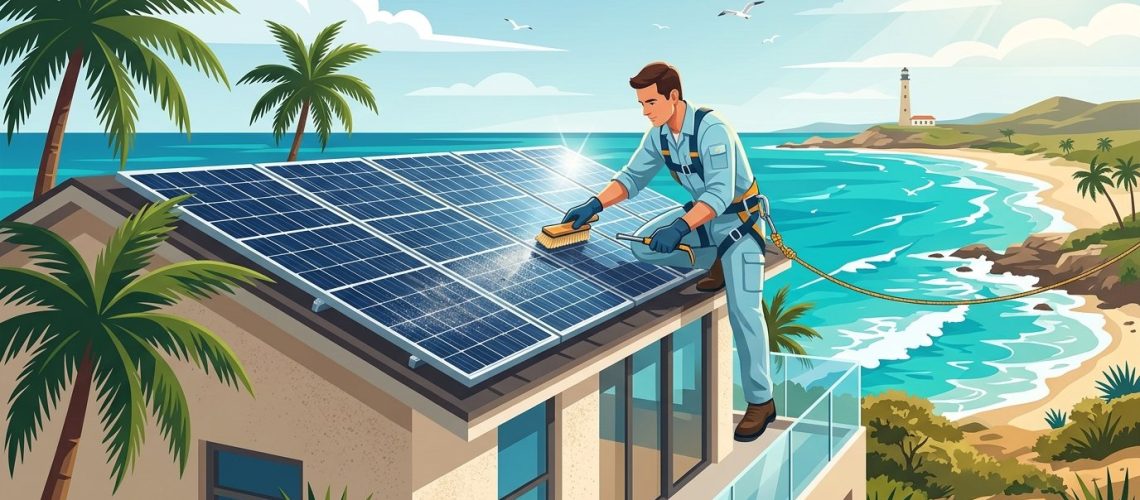
Cleaning solar panels incorrectly can be just as damaging as not cleaning them at all. High-pressure washing can force water into junction boxes or damage anti-reflective coatings. Abrasive materials scratch surfaces, permanently reducing light transmission.
Safe Cleaning Practices for Tropical Solar Maintenance
- Use soft, non-abrasive cloths or squeegees — microfiber is ideal
- Use clean, low-mineral water — hard water leaves deposits that become their own soiling problem
- Mild, non-detergent soap only when needed for stubborn salt film — rinse thoroughly
- Clean early morning or late afternoon — never clean panels at peak heat; thermal shock from cold water on hot glass can stress the panel
- Never use metal tools, scouring pads, or high-pressure jets directly on panel surfaces
What About the Frame and Mounting System?
Panel faces get most of the attention, but the mounting system deserves equal care in coastal solar panel care routines. Rinse frames and inspect fasteners regularly. Look for white oxidation buildup on aluminum and any rust-colored staining around steel fasteners — both are early signs of corrosion that should be addressed before they compromise structural integrity.
Marine-grade stainless steel and anodized aluminum components are best suited for Aruba’s environment. If your system was installed with inferior hardware, upgrading fasteners is a relatively low-cost repair that extends the life of your entire installation.
Protecting Electrical Components from Saltwater Solar Damage
Saltwater solar damage prevention extends beyond the panels themselves. Your inverter, combiner boxes, and wiring connections need attention too.
The International Electrotechnical Commission (IEC) sets standards for solar component durability in harsh environments. When choosing or maintaining a system in coastal areas, look for components rated for marine or C4/C5 corrosion categories — these are designed specifically to withstand salt air exposure.
Practical steps to protect your system’s electrical health:
- Ensure inverters are installed in shaded, ventilated, and preferably indoor locations when possible
- Inspect conduit entry points and junction boxes annually for moisture intrusion
- Apply dielectric grease to exposed electrical connections to prevent oxidation
- Check cable management — UV-rated, marine-grade conduit prevents brittleness and cracking
Annual Professional Inspections: What to Expect
Alongside your regular cleaning routine, scheduling a professional inspection once or twice a year is one of the smartest investments in your solar panel longevity in Aruba. As Caribbean solar energy specialists, we know what to look for that the untrained eye will miss.
A thorough professional inspection includes:
- Thermal imaging or performance testing — identifies underperforming panels or hot spots caused by cell damage or soiling
- Torque check on all fasteners — ensures mounting integrity after months of wind and thermal cycling
- Electrical connection audit — checks for corrosion, loose terminals, or degradation
- Inverter performance review — confirms the system is operating within expected parameters
- Monitoring data analysis — compares actual output against projected generation to detect early efficiency losses
Think of this as you would a vehicle service — not something you do because something is broken, but because staying ahead of wear is how you protect the investment over the long haul.
Monitoring Your System Year-Round
Modern solar systems include monitoring platforms that give you real-time visibility into your system’s output. This is an underused but powerful tool for Caribbean solar system upkeep. By watching your daily and monthly generation numbers, you can quickly notice if production drops unexpectedly — a reliable early indicator that cleaning, inspection, or a component check is needed.
For commercial systems ranging from 20 kWp to 100+ kWp, remote monitoring becomes even more critical. A few percentage points of efficiency loss across a large commercial array represents meaningful revenue — either in direct energy savings or avoided utility costs — slipping away quietly. You can explore how we approach monitoring as part of our commercial solar solutions for Aruba businesses.
Residential homeowners managing systems in the 5-20 kWp range benefit equally from monitoring. It transforms your solar investment from a passive installation into something you can actively steward. Learn more about what a well-maintained home system can do for your energy independence through our residential solar systems page.
Frequently Asked Questions
How does salt air actually reduce solar panel output?
Salt particles settle on panel glass and form a thin, light-scattering film. This film reduces the amount of sunlight reaching the solar cells, directly lowering energy production. Over time, uncleaned salt deposits can harden and become more difficult to remove, compounding the efficiency loss.
Can I clean my solar panels myself?
Yes, with the right approach. Use soft cloths, clean water, and avoid cleaning during peak heat hours. However, professional cleaning and inspection at least once per year is strongly recommended — particularly for roof-mounted systems where safety and thoroughness both matter.
What is the best maintenance schedule for solar panels in Aruba?
For coastal locations in Aruba, cleaning every 4-6 weeks is ideal, with a professional inspection once or twice annually. After unusual dust events — particularly Saharan dust — clean as soon as possible regardless of your regular schedule.
How do I know if my panels are underperforming due to salt damage?
Monitoring your system’s output data is the most reliable method. If your generation drops noticeably compared to the same period in previous months or against your system’s projected output, soiling or corrosion may be the cause. A professional inspection with performance testing can confirm this.
Does proper maintenance actually extend the life of my system?
Absolutely. Well-maintained systems in tropical coastal environments consistently outperform neglected ones — both in annual energy output and in total system lifespan. Most quality solar panels carry 25-year performance warranties, and regular care is what makes achieving that timeline realistic in Aruba’s environment.
Your Solar Investment Deserves to Be Cared For
Choosing solar in Aruba is a powerful statement — about your values, your financial future, and your commitment to a more resilient community. With a realistic payback period of 3-5 years and decades of clean energy ahead, the system you install today is one of the most meaningful investments you can make.
But that investment performs best when it’s properly cared for. Tropical solar maintenance isn’t complicated — it’s consistent. A regular cleaning routine, annual professional inspections, and proactive attention to your electrical components will keep your system delivering the energy independence and bill savings you invested in.
At B Energy, our community-focused solar solutions are built for Aruba’s specific environment — from the components we specify to the maintenance guidance we provide. Whether you’re protecting an existing system or planning a new installation, we’re here to help you get the most from every hour of Aruba sunshine.
Ready to schedule a maintenance inspection or talk about a new solar installation in Oranjestad? Contact our team today and let’s make sure your solar investment is working as hard as it can — for you and for Aruba’s sustainable future.