
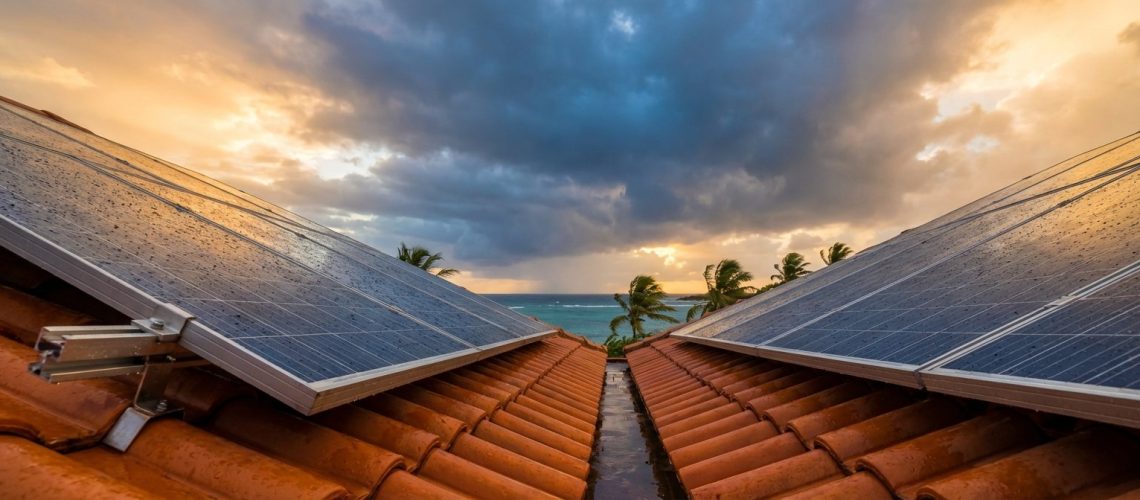
As Aruba property owners embrace renewable energy, one question keeps surfacing: can solar panels withstand the fierce tropical storms that occasionally sweep through our Caribbean paradise? The answer is a resounding yes—when designed and installed correctly. Modern hurricane-resistant solar technology has transformed how island communities approach clean energy, offering both sustainability and resilience in the face of extreme weather conditions.
The reality is that solar panels engineered for Caribbean conditions can survive wind speeds exceeding 140 mph, making them surprisingly robust investments for property owners throughout Aruba. Understanding what makes these systems hurricane-resistant isn’t just about peace of mind—it’s about protecting your investment, ensuring continuous energy independence, and contributing to a more sustainable island future without worrying about storm season.
Understanding Hurricane-Resistant Solar Technology

Hurricane-resistant solar panels aren’t fundamentally different from standard panels—they’re specifically engineered and installed to meet rigorous wind load standards required for tropical storm zones. The key lies in three critical components: the panel construction itself, the mounting system, and the installation methodology.
Modern solar panels designed for Caribbean installations feature reinforced aluminum frames, tempered glass that can withstand significant impact, and robust junction boxes sealed against moisture intrusion. These panels undergo certification testing that simulates hurricane-force winds, ensuring they meet or exceed IEC 61215 international standards and local Caribbean building codes.
The mounting hardware represents perhaps the most crucial element of hurricane resistance. Heavy-duty aluminum or stainless steel racking systems anchor panels to your roof structure using specialized fasteners that penetrate deep into roof trusses, not just sheathing. Quality installations in Aruba utilize mounting systems rated for wind speeds of 150+ mph, which exceed even Category 4 hurricane conditions.
Engineering Standards That Matter
For Aruba property owners, understanding certification standards helps ensure you’re investing in truly resilient technology. Look for solar panels and mounting systems that meet:
- IEC 61215 certification: International standard for crystalline silicon panel durability
- UL 1703 certification: Safety standard specifically addressing flat-plate photovoltaic modules
- Wind load ratings: Minimum 140 mph wind resistance for Caribbean installations
- Corrosion resistance: Marine-grade materials essential for coastal salt air exposure
- Impact resistance: Tempered glass rated to withstand flying debris
5 Critical Installation Factors for Storm Resilience

Even the highest-quality hurricane-resistant panels will fail if improperly installed. Here’s what distinguishes Caribbean-ready solar installations:
1. Roof Penetration Depth and Spacing
Professional installers anchor mounting rails directly into roof trusses using lag bolts that penetrate at least 2-3 inches into structural wood. Attachment points should be spaced every 4 feet or less, creating a secure grid that distributes wind loads across your roof structure rather than concentrating stress at isolated points.
2. Aerodynamic Panel Layout
Strategic panel placement reduces wind uplift. Experienced Caribbean installers avoid placing panels too close to roof edges where wind forces concentrate, leaving appropriate setbacks that minimize uplift pressure during high-wind events. Arrays positioned lower on pitched roofs experience less wind stress than those near ridgelines.
3. Marine-Grade Hardware
Coastal Aruba conditions demand stainless steel fasteners and corrosion-resistant aluminum components. Standard galvanized steel deteriorates rapidly in salt air, compromising system integrity long before hurricane season arrives. Quality installations exclusively use marine-grade materials engineered for tropical coastal environments.
4. Waterproofing and Flashing
Every roof penetration represents a potential water intrusion point. Hurricane-resistant installations incorporate professional flashing systems and sealants that maintain waterproof integrity even when wind-driven rain tests every vulnerable point in your roof assembly.
5. Electrical Conduit Protection
Exposed electrical conduits must be properly secured and protected against wind damage. Rigid metal conduit firmly attached to building structures prevents the whipping action that can sever electrical connections during storms, ensuring your system remains intact and operational.
The Financial Protection Advantage
Investing in properly engineered hurricane-resistant solar delivers significant financial benefits beyond storm survival. Property owners throughout Aruba who install quality solar systems typically achieve full return on investment within 3-5 years through electricity savings alone—and that investment remains protected even when storms threaten.
Consider that electricity costs in the Caribbean consistently rank among the highest globally. A properly sized 5-10 kWp residential system can reduce your electricity bills by 70-90%, generating thousands in annual savings. When that system is built to withstand hurricanes, you’re not just protecting the panels—you’re safeguarding years of future energy independence and financial returns.
Insurance considerations also favor hurricane-resistant installations. Many insurance providers offer premium reductions for properties with properly installed, certified renewable energy systems, recognizing that quality solar installations actually improve building resilience rather than adding vulnerability.
Pre-Storm Preparation Steps
While hurricane-resistant solar systems are designed to remain installed during storms, understanding preparation protocols provides additional peace of mind:
Do NOT remove panels: Contrary to intuition, removing properly installed panels creates more vulnerability by exposing mounting hardware and roof penetrations. Systems engineered for hurricane conditions are safer left in place.
Document your system: Photograph your installation before storm season for insurance purposes. Maintain records of all equipment serial numbers, warranties, and installation certifications.
Inspect regularly: Annual inspections by qualified technicians identify loose fasteners, corrosion issues, or damage before they compromise system integrity.
Clear debris: Remove branches, loose objects, or debris near your solar array that could become projectiles during high winds.
Understand shutdown procedures: Know how to safely disconnect your system from the grid if necessary, though modern inverters typically handle this automatically.
Post-Storm Recovery and Assessment
After a hurricane passes, systematic assessment ensures your solar system returns to optimal performance safely. Begin with visual inspection from ground level, looking for obvious damage, displaced panels, or compromised mounting hardware. Never climb onto your roof immediately after a storm—structural damage may not be visible.
Professional post-storm inspections should verify electrical connections remain secure, inverters function properly, and no water intrusion occurred at roof penetrations. Quality solar companies serving Aruba provide priority post-storm service to restore renewable energy systems quickly, helping properties regain energy independence when grid power may remain unavailable for extended periods.
This resilience advantage distinguishes solar energy in Caribbean communities. While grid infrastructure requires extensive repair after major storms, properly installed solar systems with battery backup can provide essential power throughout recovery periods—a compelling benefit that transcends typical renewable energy advantages.
Selecting the Right Solar Partner
The difference between solar panels that survive hurricanes and those that become expensive debris lies primarily in installation expertise and component quality. Caribbean property owners should prioritize solar partners with:
- Demonstrated experience with coastal and hurricane-zone installations
- Comprehensive understanding of local building codes and wind load requirements
- Commitment to marine-grade, corrosion-resistant materials
- Transparent warranties covering both equipment and installation workmanship
- Local presence ensuring rapid response for maintenance and post-storm service
- Track record of installations that have survived previous hurricane seasons
Companies specializing in Caribbean solar understand that island installations demand higher standards than mainland projects. They don’t simply adapt continental U.S. installation practices—they employ Caribbean-specific engineering that accounts for salt air corrosion, extreme UV exposure, tropical humidity, and hurricane wind loads simultaneously.
The Community Resilience Connection
When multiple properties throughout Aruba invest in hurricane-resistant solar, the benefits extend beyond individual homes and businesses. Distributed renewable energy generation reduces strain on centralized power infrastructure, which remains vulnerable to widespread outages during major storms. Communities with significant solar adoption supported by battery storage capabilities can maintain essential services, communication networks, and quality of life even when grid power fails.
This resilience represents solar energy’s most profound contribution to Caribbean communities—transforming vulnerable, fossil-fuel-dependent electrical systems into distributed, resilient networks that adapt and survive rather than collapse under extreme conditions. Property owners investing in hurricane-resistant solar aren’t just protecting their own interests; they’re contributing to broader community sustainability and disaster preparedness.
Frequently Asked Questions
What is the 33% rule in solar panels?
The 33% rule typically refers to optimal solar panel efficiency ranges, suggesting panels should maintain at least 33% of their rated capacity throughout their lifespan. However, modern solar panels consistently exceed this benchmark, with quality panels maintaining 80-85% efficiency after 25 years. For hurricane-resistant installations in Aruba, focus instead on wind load ratings and structural integrity rather than this outdated efficiency guideline.
Will solar panels be cheaper in 2026?
Solar panel costs have stabilized in 2026 after years of declining prices. While modest cost reductions may continue, the dramatic price drops seen in previous decades have leveled off. The better question for Aruba property owners is whether delaying installation saves money—and the answer is typically no. Each month without solar represents lost savings from high Caribbean electricity costs, making immediate installation more financially advantageous than waiting for marginally lower equipment prices.
Why is it so hard to sell a house with solar panels?
This concern primarily affects properties with leased solar systems or power purchase agreements, not owned systems. In Caribbean markets like Aruba, owned solar installations typically increase property values by 3-5% because they represent reduced operating costs and energy independence—highly attractive features for island property buyers. Hurricane-resistant installations with transferable warranties actually enhance property marketability rather than creating sales obstacles.
How safe are solar panels in a hurricane?
Properly engineered and professionally installed solar panels designed for Caribbean conditions are remarkably safe in hurricanes. Quality systems routinely survive Category 4 storms with minimal or no damage. The key factors are certification standards (minimum 140 mph wind ratings), professional installation using marine-grade materials, and proper mounting to roof trusses. Solar panels can actually protect the roof sections they cover from wind and debris damage during storms.
Investing in Caribbean Energy Independence
Hurricane-resistant solar panels represent more than weather-proof technology—they embody energy independence, financial security, and environmental stewardship engineered specifically for island life. Aruba property owners who invest in quality Caribbean solar systems enjoy dramatically reduced electricity costs, protection from future rate increases, and resilient renewable energy that survives our most challenging weather conditions.
The transformation happening across Caribbean communities demonstrates that sustainability and resilience aren’t competing priorities—they’re complementary goals achieved through thoughtful renewable energy adoption. As more Aruba properties embrace hurricane-resistant solar, we’re building not just individual energy independence but collective community resilience that will serve island residents for generations.
Ready to explore hurricane-resistant solar for your Aruba property? Connect with Caribbean solar specialists who understand island conditions, prioritize quality engineering over shortcuts, and build systems designed to harness abundant Caribbean sunshine safely through every season—including hurricane season.