
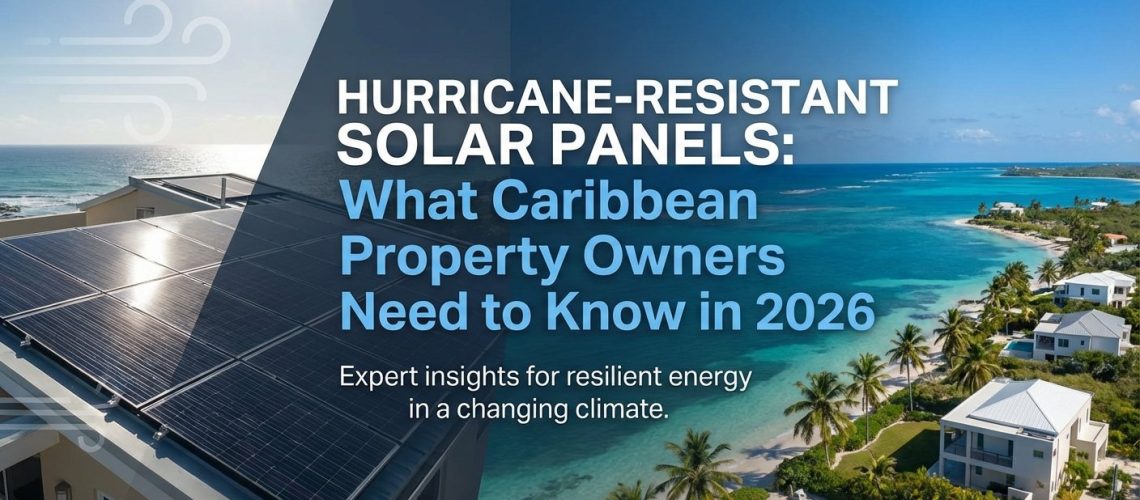
The Caribbean’s shift toward solar energy has never been more promising, yet island property owners face a unique challenge: how do you harness the abundant sunshine while protecting your investment from nature’s most powerful storms? With hurricane seasons becoming increasingly unpredictable and electricity costs in the ABC islands remaining among the highest globally, understanding hurricane-resistant solar technology isn’t just about weathering the next storm—it’s about building energy independence that lasts.
For homeowners and businesses across Aruba, Bonaire, and Curacao, the question isn’t whether solar makes financial sense—with ROI achievable in 3-5 years despite premium installation costs—but rather how to ensure your system can withstand Category 5 winds while delivering decades of reliable power. The good news? Caribbean solar panels have evolved dramatically, and coastal solar installation standards in 2026 now incorporate lessons learned from years of tropical weather challenges.
Understanding Hurricane Rating Standards for Island Solar Systems
Not all solar panels are created equal when it comes to wind resistance. While standard panels might suffice in calmer climates, Caribbean solar panels require certification that meets or exceeds international hurricane standards. In 2026, property owners should look for systems tested to withstand wind speeds of at least 160 mph (257 km/h), equivalent to Category 5 hurricane conditions.
The most critical certifications include:
- IEC 61215 and IEC 61730: International standards for panel safety and performance under extreme conditions
- UL 1703: North American safety certification that includes wind load testing
- Miami-Dade County NOA (Notice of Acceptance): One of the world’s strictest hurricane-resistance certifications, ideal for Caribbean applications
- TÜV certification: European testing that validates structural integrity under sustained high winds
When evaluating Curacao renewable energy systems or exploring solar installation Bonaire options, requesting documentation of these certifications ensures you’re investing in truly hurricane-resistant solar technology rather than standard equipment marketed for island use.
Engineering Matters: Mounting Systems That Hold Strong
The solar panels themselves represent only half the hurricane-resistance equation. The mounting system—the framework that secures panels to your roof or ground mount—determines whether your investment survives or becomes airborne debris during extreme weather.
Modern coastal solar installation employs several advanced mounting strategies:
Ballasted Mounting Systems
For flat commercial roofs common throughout Caribbean business districts, ballasted systems use weighted platforms that don’t penetrate the roof membrane. In 2026, advanced designs incorporate aerodynamic profiles that reduce wind uplift while maintaining the weight distribution that keeps systems grounded. These work exceptionally well for businesses seeking 20-100+ kWp installations without compromising roof integrity.
Penetrating Rail Systems
For sloped residential roofs, penetrating mounts that anchor directly into roof trusses provide superior wind resistance. Hurricane-resistant installations use marine-grade stainless steel hardware—essential in salt-air environments—and seal every penetration point with multiple waterproofing layers. The spacing between mounting points is reduced compared to mainland installations, creating a stronger attachment grid.
Ground Mount Considerations
Some property owners opt for ground-mounted arrays, particularly for larger 50+ kWp systems. These require deep foundation piers—often extending 6-8 feet below grade—and engineering calculations specific to Caribbean soil conditions and wind exposure. While requiring more land area, ground mounts can be designed with hurricane-resistant features like panel stow systems that tilt arrays to horizontal positions before storms arrive.
The Science of Wind Load and Caribbean Conditions
Understanding wind load calculations helps property owners make informed decisions about Aruba solar energy systems and installations throughout the ABC islands. Wind pressure increases exponentially with velocity—doubling wind speed quadruples the force on your panels. This is why the difference between systems rated for 120 mph versus 160 mph isn’t marginal; it’s transformational.
Caribbean locations face additional challenges beyond raw wind speed:
Salt Air Corrosion: Coastal installations combat constant salt spray that accelerates corrosion. Hurricane-resistant solar systems use anodized aluminum frames, stainless steel fasteners, and junction boxes with enhanced sealing. The investment in corrosion-resistant materials pays dividends in system longevity, often extending useful life from 20 to 30+ years.
Uplift Dynamics: Wind doesn’t just push against panels—it creates uplift forces that attempt to peel systems from roofs. Engineers account for these forces through careful attention to roof edge distances, panel orientation, and attachment density. Systems positioned near roof edges or on higher structures require additional reinforcement.
Flying Debris Impact: Hurricane winds transform everyday objects into projectiles. While no solar panel can guarantee survival after direct impact from large debris, quality island solar systems use tempered glass that resists shattering and maintains structural integrity even with surface damage.
System Sizing for Resilience and Recovery
When designing hurricane-resistant solar installations, system sizing takes on additional importance. Caribbean property owners often ask whether to incorporate battery storage as part of their hurricane preparedness strategy.
For residential applications (typically 5-15 kWp), adding 10-20 kWh of battery storage provides critical power during grid outages that commonly follow severe weather. This enables refrigeration, communication, and basic lighting—essentials for family safety and comfort. The ROI calculation extends beyond daily electricity savings to include the value of energy security during emergencies.
Commercial installations (20-100+ kWp) serve dual purposes: dramatic reduction in operational costs—often 60-80% savings on electricity—and business continuity advantages. Hotels, restaurants, and retail operations that maintain power while competitors remain dark gain competitive advantages that extend beyond the storm itself, building customer loyalty and community reputation.
Pre-Storm and Post-Storm Protocols
Hurricane-resistant solar doesn’t mean “install and forget.” Responsible property owners implement seasonal maintenance and storm protocols that maximize system resilience.
Pre-Storm Preparation
Modern solar installations include disconnect switches that allow system shutdown before hurricanes arrive. While panels themselves should withstand high winds, shutting down the system protects inverters and electrical components from power surges and lightning strikes. Some advanced installations include remote monitoring that alerts owners to system status before, during, and after storms.
Annual inspections—ideally scheduled before hurricane season—identify loose fasteners, corroded connections, or damaged seals. Addressing these minor issues prevents them from becoming system failures during extreme weather.
Post-Storm Assessment
After major weather events, visual inspection identifies obvious damage, but professional assessment ensures electrical safety before system restart. Quality Caribbean solar installation companies offer post-storm inspection services, often prioritizing existing customers to restore energy independence quickly.
Insurance and Warranty Considerations
Property insurance policies throughout Aruba, Bonaire, and Curacao have evolved to address solar installations. When selecting hurricane-resistant solar systems, verify that your installer provides:
- Comprehensive workmanship warranties: Minimum 10 years covering installation quality
- Equipment warranties: 25+ years for panels, 10+ years for inverters
- Wind damage coverage: Explicit protection against hurricane-related damage
Insurance carriers increasingly recognize that properly installed, certified hurricane-resistant solar adds property value rather than risk. Some insurers offer premium reductions for homes and businesses with resilient energy systems, acknowledging reduced claim likelihood from properties maintaining power during outages.
Local Expertise and Caribbean-Specific Installation Standards
The difference between adequate solar installation and truly hurricane-resistant solar comes down to local expertise and Caribbean-specific experience. Installers who understand Bonaire’s unique wind patterns, Curacao’s coastal exposure variations, and Aruba’s building code requirements bring value that transcends generic solar knowledge.
When evaluating solar installation Bonaire providers or Curacao renewable energy companies, ask specific questions:
- How many systems have you installed that have survived major hurricanes?
- What mounting systems do you recommend for my specific roof type and exposure?
- Do you use marine-grade components throughout the installation?
- What is your post-storm service response time?
- Can you provide references from customers whose systems weathered recent storms?
Companies deeply rooted in Caribbean communities—those who give back to local sustainability initiatives and employ island residents—have reputational incentives to ensure every installation meets the highest standards. Their success depends on systems that perform flawlessly year after year, storm after storm.
The Financial Equation: Premium Investment, Superior Returns
Hurricane-resistant solar installations cost approximately 15-25% more than standard systems due to enhanced mounting hardware, marine-grade components, and rigorous engineering. For a typical 10 kWp residential system, this might represent $2,000-$4,000 in additional investment.
However, this premium delivers multiple returns:
Longevity: Systems engineered for hurricane resistance typically outlast standard installations by 5-10 years, reducing lifecycle replacement costs.
Insurance savings: Lower premiums and deductibles offset initial costs over time.
Peace of mind: The intangible value of energy security during emergencies—maintaining food preservation, communication, and comfort—represents significant quality-of-life improvement.
Property value: Hurricane-resistant solar systems increase property marketability and sale prices, particularly as Caribbean buyers increasingly prioritize energy independence.
With electricity rates in the ABC islands ranging from $0.30-$0.45 per kWh—among the world’s highest—even premium solar installations achieve ROI in 3-5 years. The subsequent 20+ years of near-free electricity represent wealth creation that transforms household and business finances.
Building a Sustainable Caribbean Future, One Installation at a Time
Every hurricane-resistant solar system installed across Aruba, Bonaire, and Curacao represents more than individual energy independence—it contributes to collective Caribbean resilience. As island solar systems proliferate, communities reduce dependence on imported fossil fuels, improve air quality, and demonstrate climate leadership.
The technology exists today to harness Caribbean sunshine safely and reliably, even in hurricane-prone environments. The engineering standards, certified equipment, and installation expertise have matured to the point where solar energy represents not a risky experiment but a proven investment in sustainable prosperity.
For property owners weighing the decision, 2026 represents an ideal time to act. Technology has advanced, installation standards have strengthened through real-world testing, and the financial equation has never been more compelling. Hurricane-resistant solar doesn’t require compromising between environmental values and practical concerns—it delivers both.
Your journey toward energy independence begins with education, continues through careful provider selection, and culminates in decades of reliable, clean power that serves your family or business through calm days and stormy weather alike. The Caribbean’s solar future is bright, resilient, and within reach for every property owner ready to make the commitment.
Ready to explore hurricane-resistant solar solutions engineered specifically for Caribbean conditions? Connect with experienced local installers who understand island challenges and have proven track records of systems that perform year after year. Your energy independence and contribution to a sustainable Caribbean future await—protected and resilient, no matter what weather comes your way.