
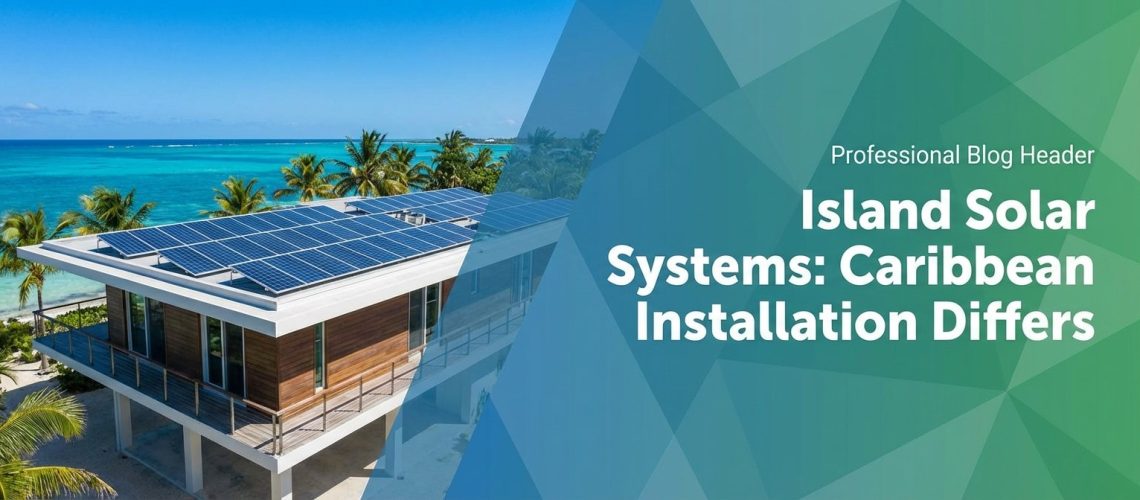
When most people think about solar panel installation, they picture standard rooftop setups designed for mainland conditions. But Caribbean solar installation operates under an entirely different set of rules. The combination of intense tropical sun, constant salt-laden winds, elevated humidity, and unique architectural considerations means that island solar systems require specialized approaches that mainland installers rarely encounter.
Understanding these differences isn’t just academic—it directly impacts system performance, longevity, and your return on investment. A solar array designed for temperate climates and installed without considering island-specific factors can experience accelerated degradation, reduced output, and costly repairs within just a few years. The good news? When properly designed for Caribbean conditions, tropical solar panels can deliver exceptional performance and energy independence for decades.
The Salt Air Challenge: Corrosion Protection Matters
Perhaps the most significant difference in Caribbean solar installation is addressing salt air exposure. In coastal environments, microscopic salt particles carried by trade winds settle on every surface, creating corrosive conditions that can devastate standard solar equipment.
Salt air solar protection begins with material selection. Island solar systems require marine-grade components throughout the installation. This includes anodized aluminum frames with enhanced protective coatings, stainless steel mounting hardware rated for coastal exposure, and electrical components housed in weather-sealed enclosures that prevent salt intrusion. Standard galvanized steel that works perfectly well in Arizona or Nevada will rust and fail within months in Caribbean conditions.
The junction boxes on tropical solar panels must feature premium seals and gaskets that maintain integrity despite temperature cycling and UV exposure. Cable connections require dielectric grease application and regular inspection schedules. Even the smallest gap where salt-laden moisture can penetrate becomes a potential failure point.
Smart Caribbean homeowners and business owners recognize that paying slightly more upfront for marine-grade components delivers massive long-term savings by avoiding premature replacement and maintaining optimal energy production throughout the system’s 25-30 year lifespan.
Mounting Strategies for Island Architecture
Caribbean building styles present unique opportunities and challenges for solar installations. Traditional island architecture features everything from Dutch colonial tile roofs to modern concrete structures, each requiring specialized mounting approaches.
Flat Concrete Roofs
Many Caribbean commercial buildings and homes feature flat or low-slope concrete roofs—ideal for solar installations when approached correctly. These installations typically use ballasted racking systems that don’t penetrate the waterproof membrane, eliminating potential leak points. The ballast weight must be carefully calculated to resist strong trade winds while respecting structural load limits.
Proper tilt angles on flat roof installations maximize energy production. In the Caribbean’s latitude range (12-18 degrees north), panels tilted between 15-20 degrees capture optimal solar radiation while allowing rainwater to sheet off, providing natural cleaning that maintains efficiency.
Pitched Metal and Tile Roofs
For pitched roofs, penetrations through roofing material require meticulous flashing and waterproofing techniques. Island renewable energy professionals understand that what works in drier climates is insufficient when heavy tropical downpours test every seal. Premium waterproofing compounds, reinforced mounting points, and redundant sealing systems protect your home from water intrusion.
Metal roofs, increasingly popular for their durability, offer excellent mounting opportunities using specialized clamps that grip standing seams without creating penetrations. This approach maintains roof integrity while providing secure panel attachment capable of withstanding sustained winds.
Engineering for High Winds and Tropical Weather
While Aruba sits outside the primary hurricane belt and experiences less severe storm activity than many Caribbean neighbors, trade winds consistently blow at 15-25 mph with occasional stronger gusts. These constant forces require thoughtful engineering in island solar systems.
Mounting systems must be engineered for sustained wind loads, not just occasional gusts. This means closer rail spacing, additional attachment points, and strategic panel placement that considers wind uplift patterns across your roof surface. Corner and edge mounting requires extra reinforcement where wind forces concentrate.
The aerodynamic profile of the installation matters too. Lower-profile mounting systems reduce wind resistance, decreasing structural stress while maintaining optimal tilt angles for solar production. Some Caribbean solar installation approaches include wind deflectors or strategic spacing between panel rows that allow wind to pass through rather than creating uplift.
Electrical Considerations in Humid Environments
Caribbean humidity levels consistently range from 70-85%, creating conditions where electrical connections face constant moisture exposure. Island solar systems address this through multiple protective strategies.
Inverters, optimizers, and disconnect switches require weatherproof enclosures with proper ventilation that prevents heat buildup while excluding moisture. Many successful Caribbean installations locate inverters in climate-controlled indoor spaces when possible, extending equipment life and maintaining peak efficiency.
Conduit systems carrying DC power from panels to inverters must be properly sealed at all junction points. Even small amounts of moisture infiltration can cause tracking, corrosion, and eventual system failure. UV-resistant conduit rated for tropical sun exposure prevents degradation that creates entry points for moisture.
Ground fault protection takes on added importance in humid environments where moisture can create unexpected current paths. Quality island renewable energy installations include multiple layers of protection that safeguard both your investment and your family.
Panel Selection for Maximum Tropical Performance
Not all solar panels perform equally under Caribbean conditions. While mainland installations might prioritize cold-weather performance or snow load ratings, tropical solar panels must excel in different parameters.
Temperature coefficient becomes critical. Solar panels lose efficiency as they heat up, and Caribbean rooftop temperatures regularly exceed 150°F under full sun. Premium panels with superior temperature coefficients maintain higher output despite heat. The difference between standard and high-performance temperature coefficients can mean 5-8% more energy production annually—substantial when you consider decades of operation.
Anti-reflective coatings and glass treatments designed for high-UV environments prevent degradation from intense tropical sun. After 20 years, quality tropical solar panels should still produce at least 85-90% of their original output, while inferior panels might drop below 75%, significantly impacting your energy independence and financial returns.
Frame construction matters tremendously in salt air environments. Double-anodized aluminum frames with marine-grade specifications resist the corrosion that quickly degrades standard frames in coastal installations.
Optimizing System Size for Island Energy Needs
Caribbean electricity costs rank among the world’s highest, often exceeding $0.30-0.40 per kWh compared to $0.10-0.15 in many mainland markets. This dramatic difference fundamentally changes solar economics.
For Caribbean homeowners, a properly sized island solar system typically ranges from 5-15 kWp, depending on household consumption patterns. With high electricity rates, these systems commonly achieve ROI in 3-5 years—exceptional performance that makes solar one of the smartest investments available.
Commercial installations range from 20-100+ kWp for retail, hospitality, and light industrial operations. Businesses with consistent daytime energy demand see particularly strong returns, as solar production directly offsets the most expensive peak-rate consumption.
System sizing requires careful analysis of consumption patterns, available roof space, and financial goals. Oversizing beyond your consumption needs provides limited value without net metering or battery storage, while undersizing leaves money on the table by continuing to purchase expensive grid electricity.
Maintenance Protocols for Long-Term Performance
Caribbean solar installation doesn’t end when the system goes live. Regular maintenance tailored to island conditions ensures decades of reliable performance.
Quarterly inspections should check for salt accumulation on panels, corrosion at connection points, and secure mounting hardware. While Caribbean rain provides natural panel cleaning, periodic washing with deionized water removes stubborn salt residue that reduces light transmission.
Annual professional inspections by experienced island renewable energy technicians catch small issues before they become expensive problems. Thermal imaging reveals hot spots indicating failing cells or connection issues. Electrical testing confirms system components operate within specifications despite challenging environmental conditions.
Vegetation management prevents shading issues that reduce production. Fast-growing tropical plants can quickly impact solar access if not regularly trimmed back from roof edges.
The Community Impact of Caribbean Solar Adoption
Individual solar installations create ripples throughout Caribbean communities. Each system reduces strain on aging island grid infrastructure, decreasing the likelihood of outages that affect everyone. Collectively, growing solar adoption reduces the island’s dependence on imported fossil fuels, keeping more money circulating within the local economy.
Businesses that invest in island solar systems often pass savings to customers through more stable pricing, while improved energy reliability supports economic growth and employment. Hotels and restaurants with solar installations reduce operating costs while demonstrating environmental commitment that resonates with eco-conscious visitors.
Residential solar adoption creates visible proof that energy independence is achievable, inspiring neighbors and friends to explore their own solar journey. This community-wide movement toward island renewable energy strengthens overall resilience and sustainability.
Financial Incentives and Accelerated Returns
Beyond the compelling economics of offsetting expensive Caribbean electricity, various incentive programs can further improve solar ROI. Tax advantages, accelerated depreciation for commercial installations, and potential government incentives reduce effective system costs.
For businesses, solar installations qualify for accelerated depreciation schedules that provide significant tax advantages in early ownership years. When combined with immediate energy cost reductions, the cash flow impact becomes powerfully positive from day one.
Property value increases represent another financial benefit. Homes and commercial properties with professionally installed island solar systems command premium prices, as energy independence and lower operating costs appeal strongly to buyers.
Making the Transition to Island Solar
Understanding how Caribbean solar installation differs from mainland approaches empowers you to make informed decisions and ask the right questions when evaluating solar providers. Look for companies with proven Caribbean experience, marine-grade component specifications, and comprehensive maintenance programs designed for tropical conditions.
The path to energy independence begins with proper assessment of your property’s solar potential, honest discussion of consumption patterns and goals, and transparent proposals that detail system specifications and performance projections.
Island solar systems represent more than technology—they’re investments in your financial future, your property’s value, and the Caribbean’s sustainable development. With specialized design addressing salt air, humidity, wind, and intense sun, properly installed tropical solar panels deliver reliable, clean energy for decades while dramatically reducing your electricity costs.
Ready to explore how island renewable energy can transform your home or business? Connect with Caribbean solar professionals who understand these unique installation requirements and have proven track records delivering high-performance systems built for tropical excellence. Your journey toward energy independence and meaningful cost savings starts with that first conversation. Let’s make it happen together, building a more sustainable, prosperous Caribbean community powered by the abundant sunshine that defines island life.