
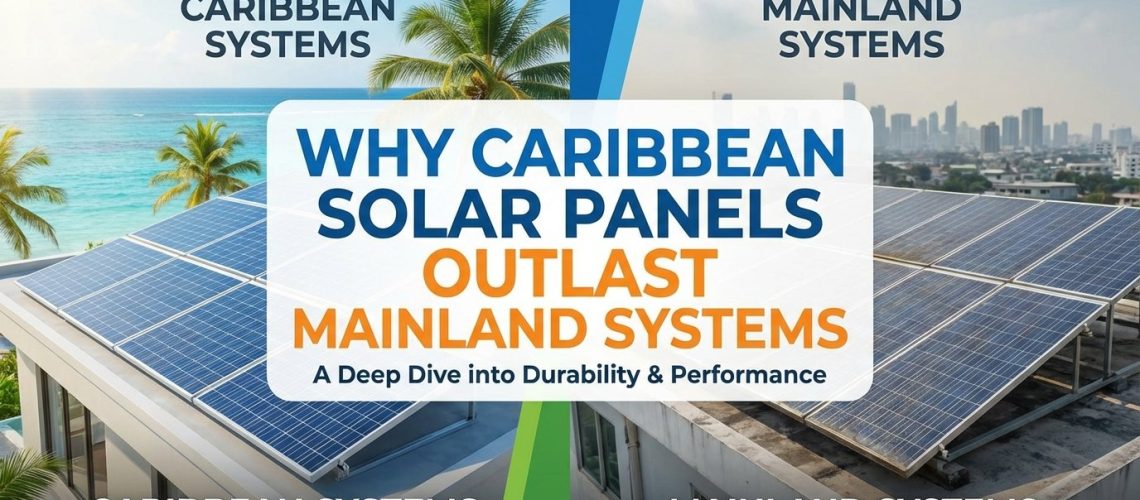
When most people think about harsh conditions for solar panels, they imagine extreme cold, heavy snow, or ice accumulation. Yet the reality is quite different—Caribbean solar panels frequently outlast their mainland counterparts, delivering decades of reliable performance in conditions that might seem challenging at first glance. The secret lies in understanding what truly damages solar equipment and how tropical island environments actually provide surprising advantages for long-term solar durability.
For Aruba homeowners and businesses exploring renewable energy options, this endurance translates directly to better returns on investment and greater energy security. While mainland systems face environmental stresses that Caribbean installations avoid entirely, island solar systems benefit from design innovations specifically engineered for tropical excellence.
The Temperature Advantage of Island Solar Systems
Solar panels might generate electricity from sunlight, but they actually perform more efficiently in moderate temperatures. This is where Caribbean solar panels gain a significant edge over systems in continental climates.
Mainland solar installations experience dramatic temperature swings that create physical stress on panel materials. A system in the northern United States might endure temperatures ranging from -20°F in winter to 100°F in summer—a 120-degree temperature range that causes repeated expansion and contraction of materials. These thermal cycles gradually degrade solder joints, weaken frame connections, and stress electrical components.
In contrast, Aruba’s stable year-round temperatures typically range from 80°F to 90°F, creating minimal thermal stress. Solar panels operate within their optimal temperature envelope consistently, reducing material fatigue and extending component lifespan. This consistency means fewer micro-cracks in solar cells, better preservation of encapsulant materials, and longer-lasting electrical connections.
The moderate temperature stability found in tropical climate solar installations contributes to performance retention rates that exceed manufacturer expectations. While most solar panels are warranted to maintain 80% of their original output after 25 years, properly installed Caribbean solar panels often exceed these benchmarks, maintaining higher efficiency levels well into their third decade of operation.
What Really Threatens Solar Panel Durability
Understanding solar panel longevity requires knowing the actual environmental factors that cause degradation. Many assumptions about tropical conditions prove incorrect when examined closely.
Ice and Snow: The Silent System Killers
Frozen precipitation creates some of the most damaging conditions for solar installations. Ice accumulation adds enormous weight to racking systems, stressing mounting hardware and potentially damaging roof structures. When snow melts and refreezes, water can infiltrate junction boxes and cable connections, causing corrosion and electrical failures.
Caribbean renewable energy systems completely avoid these risks. The absence of freezing conditions means no ice damage, no snow load stress, and no freeze-thaw cycles that can compromise waterproof seals over time. This single advantage contributes years to the functional lifespan of island solar systems.
Temperature Cycling Versus Stable Heat
Material scientists recognize thermal cycling—repeated heating and cooling—as more damaging than consistent exposure to elevated temperatures. A solar panel that experiences daily temperature swings of 50-60 degrees faces cumulative stress that weakens lamination bonds and creates micro-separations between layers.
The relatively narrow temperature range in Aruba means solar panels experience minimal daily temperature variation compared to mainland systems. Even accounting for panel surface temperatures that can reach 150°F during peak sun exposure, the daily thermal cycle remains moderate and consistent rather than extreme and variable.
Hail: The Catastrophic Impact Threat
Hail damage represents one of the most common causes of solar panel failure in continental climates. A single severe hailstorm can destroy entire solar arrays, shattering tempered glass surfaces and rendering panels inoperative. Insurance claims for hail-damaged solar systems run into millions of dollars annually across the mainland United States.
Island solar systems in Aruba face no hail risk whatsoever. This immunity to impact damage from frozen precipitation ensures that panels maintain their structural integrity throughout their operational lifetime, with glass surfaces remaining intact and protective layers staying sealed.
Engineering Excellence for Tropical Performance
Modern Caribbean solar panels aren’t simply standard equipment installed in a different location—they represent purpose-built systems engineered specifically for tropical climate solar excellence.
Advanced Corrosion Protection
Salt air presents a legitimate consideration for coastal installations, and quality island solar systems incorporate superior corrosion-resistant materials. Anodized aluminum frames, marine-grade stainless steel hardware, and enhanced sealing technologies protect electrical connections from moisture intrusion.
Premium solar installations in Aruba utilize mounting systems with protective coatings specifically rated for coastal environments. These systems often exceed the durability of standard mainland mounting equipment, which may rust or corrode when exposed to road salt during winter months.
UV-Resistant Component Selection
Tropical sunshine does deliver higher UV exposure than many mainland locations, and this consideration has driven innovation in Caribbean renewable energy equipment. Modern solar panels feature advanced encapsulant materials and backsheet technologies that resist UV degradation far better than older generation products.
Contemporary ethylene vinyl acetate (EVA) encapsulants and fluoropolymer backsheets maintain their protective properties for decades under intense UV exposure. When combined with high-quality tempered glass that filters harmful wavelengths, these materials ensure the photovoltaic cells remain protected throughout the system’s operational lifetime.
Wind Load Engineering
Professional solar installations in Aruba incorporate robust mounting systems engineered for tropical wind conditions. Proper racking design with appropriate attachment spacing and structural calculations ensures panels remain secure during strong weather events.
These same engineering standards often exceed the requirements for mainland installations, where wind loads may be calculated more conservatively. The result is a solar array with structural integrity that contributes to overall system longevity.
Real-World Performance Data: The Caribbean Advantage
Field performance data from tropical climate solar installations consistently demonstrates exceptional longevity. Solar systems installed in Caribbean locations during the early 2000s continue operating at impressive efficiency levels, with many systems maintaining 85-90% of their original output after two decades of continuous operation.
Comparison studies between similar solar panel models installed in various climates reveal that tropical installations experience slower degradation rates. The absence of freeze-thaw cycling, immunity to snow and ice damage, and elimination of hail risk create conditions where the primary remaining factors affecting lifespan—normal material aging and UV exposure—progress at predictable, manageable rates.
For Aruba businesses investing in commercial solar systems ranging from 20 kWp to 100+ kWp, this extended performance window directly enhances return on investment. A system that maintains higher output for longer periods generates more cumulative electricity, delivering greater financial returns and extended energy independence.
Maintenance Advantages in Island Environments
The stable tropical conditions that extend solar panel lifespan also simplify maintenance requirements, further contributing to long-term system value.
Mainland solar installations require seasonal maintenance considerations—clearing snow and ice, inspecting for hail damage, checking for moisture intrusion after freeze-thaw cycles, and verifying structural integrity after severe winter weather. These maintenance demands add to the lifetime cost of system ownership.
Caribbean solar panels benefit from straightforward maintenance routines focused primarily on keeping panels clean for optimal performance. Periodic rinsing to remove salt residue and dust maintains efficiency, while annual professional inspections verify electrical connections and mounting system integrity. The absence of weather-related damage means fewer surprise repairs and more predictable maintenance budgets.
Quality Installation: The Foundation of Longevity
While environmental advantages contribute significantly to solar panel durability in Aruba, proper installation remains absolutely critical. Even the most advanced Caribbean solar panels will underperform if installed incorrectly.
Professional solar installers with specific experience in tropical climate installations understand the nuances that maximize system lifespan. Proper waterproofing techniques, appropriate wire management to prevent UV damage to cables, correct torque specifications for mounting hardware, and proper electrical grounding all contribute to decades of reliable operation.
For residential systems typically ranging from 5 kWp to 15 kWp, quality installation ensures homeowners enjoy reliable energy production for 30 years or more. Commercial installations benefit equally, with properly installed systems delivering predictable performance throughout their warranted lifetime and often well beyond.
The Financial Impact of Extended System Lifespan
Superior durability translates directly to enhanced financial returns. When a solar system continues operating efficiently for 30-35 years instead of degrading significantly after 20 years, the additional electricity generation represents pure economic value.
Consider a residential 8 kWp system that costs approximately $16,000 installed. With Aruba’s high electricity rates, this system typically achieves return on investment within 4-5 years. Every year of additional high-efficiency operation beyond the payback period represents significant savings—potentially $3,000-$4,000 annually in avoided electricity costs.
If Caribbean solar panels maintain superior performance for an additional five years compared to mainland systems experiencing more severe environmental stress, that represents $15,000-$20,000 in additional value from the same initial investment. For commercial installations, these extended performance benefits scale proportionally, delivering substantial additional returns.
Environmental Stewardship Through Longevity
The exceptional durability of island solar systems delivers environmental benefits that extend beyond clean energy generation. Longer-lasting panels mean fewer systems requiring replacement, reducing manufacturing demand and the environmental impact of producing new equipment.
Each solar panel that operates for 35 years instead of 25 years represents raw materials that don’t need extraction, manufacturing processes that don’t need repetition, and shipping impacts that don’t need occurrence. This extended lifecycle contributes to truly sustainable Caribbean renewable energy development.
For environmentally conscious Aruba residents and businesses, choosing solar represents not just a decision to generate clean electricity today, but a commitment to sustainable energy infrastructure that serves the community for decades.
Building Energy Independence That Lasts
Energy security means more when it’s dependable for the long term. Caribbean solar panels that outlast mainland systems provide Aruba homeowners and businesses with energy independence they can count on for decades.
As electricity costs continue rising globally, solar systems installed today become increasingly valuable over time. A system that maintains high performance for 30-35 years shields owners from three decades of utility rate increases, providing financial predictability and security.
This extended energy independence supports business planning, stabilizes household budgets, and contributes to community resilience. When solar systems prove their durability year after year, they become trusted infrastructure rather than uncertain technology.
Your Path to Lasting Solar Performance
The proven durability of Caribbean solar panels removes one of the final barriers to solar adoption—concerns about long-term performance and reliability. The evidence is clear: properly installed island solar systems in Aruba benefit from environmental conditions that actually enhance longevity compared to mainland installations.
Whether you’re a homeowner ready to eliminate monthly electricity bills or a business owner seeking predictable energy costs and enhanced sustainability, now is the ideal time to explore solar options. The combination of superior durability, excellent sun exposure, and high electricity rates creates compelling economics for Caribbean renewable energy investment.
Take the first step toward energy independence that lasts decades. Contact experienced solar professionals who understand tropical climate installations and can design a system optimized for your specific energy needs. Your solar panels will likely outlast your expectations—and deliver value throughout their extended lifetime.