
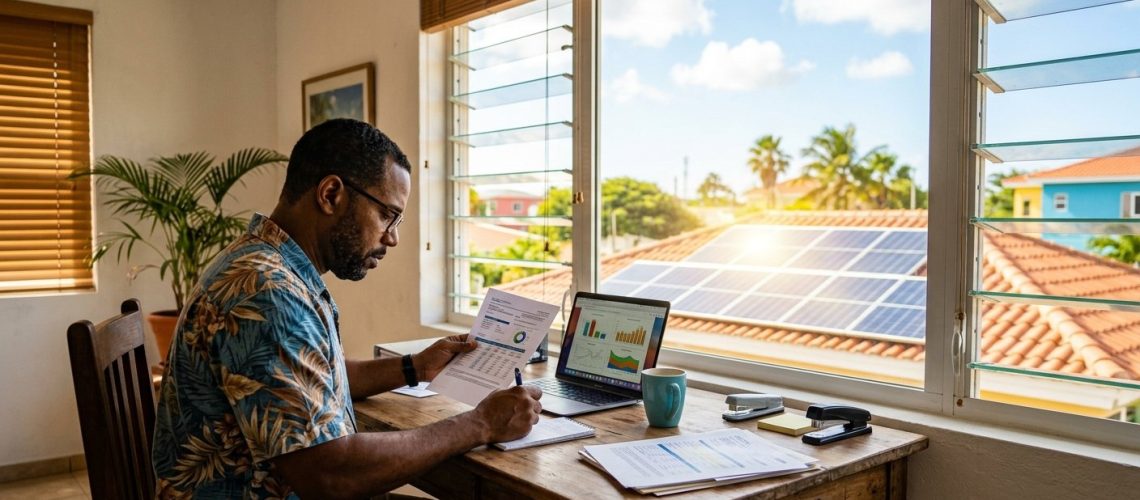
Your WEB Aruba electricity bill is the single most important document you need before investing in solar. It contains three numbers — monthly kWh consumption, total bill amount, and peak usage months — that determine the right system size for your home or business. Understanding each line item, especially the volatile fuel clause adjustment, shows exactly how much solar can save you.
- Your monthly kWh consumption is the foundation of every solar system sizing calculation.
- The fuel clause adjustment (Brandstoftoeslag) fluctuates with global oil prices — solar eliminates your exposure to it.
- Fixed service fees remain on your bill after going solar, since you stay connected to the WEB Aruba grid.
- Residential systems in Oranjestad typically range from 5 kWp for smaller homes to 100+ kWp for larger commercial properties.
- Most B Energy clients see payback periods in the 3–5 year range; bring 12 months of bills to your consultation for the most accurate assessment.
Think of your bill as a roadmap of your energy habits. When you hand it to a solar energy specialist during a consultation, they can design a system tailored precisely to your home or business — not a generic one-size-fits-all solution. Understanding your bill also prevents a common mistake: choosing a solar system that is too small (leaving money on the table) or oversized (paying for capacity you will never use). A precise solar energy assessment begins with precise data.
Why Your Bill Matters More Than You Think
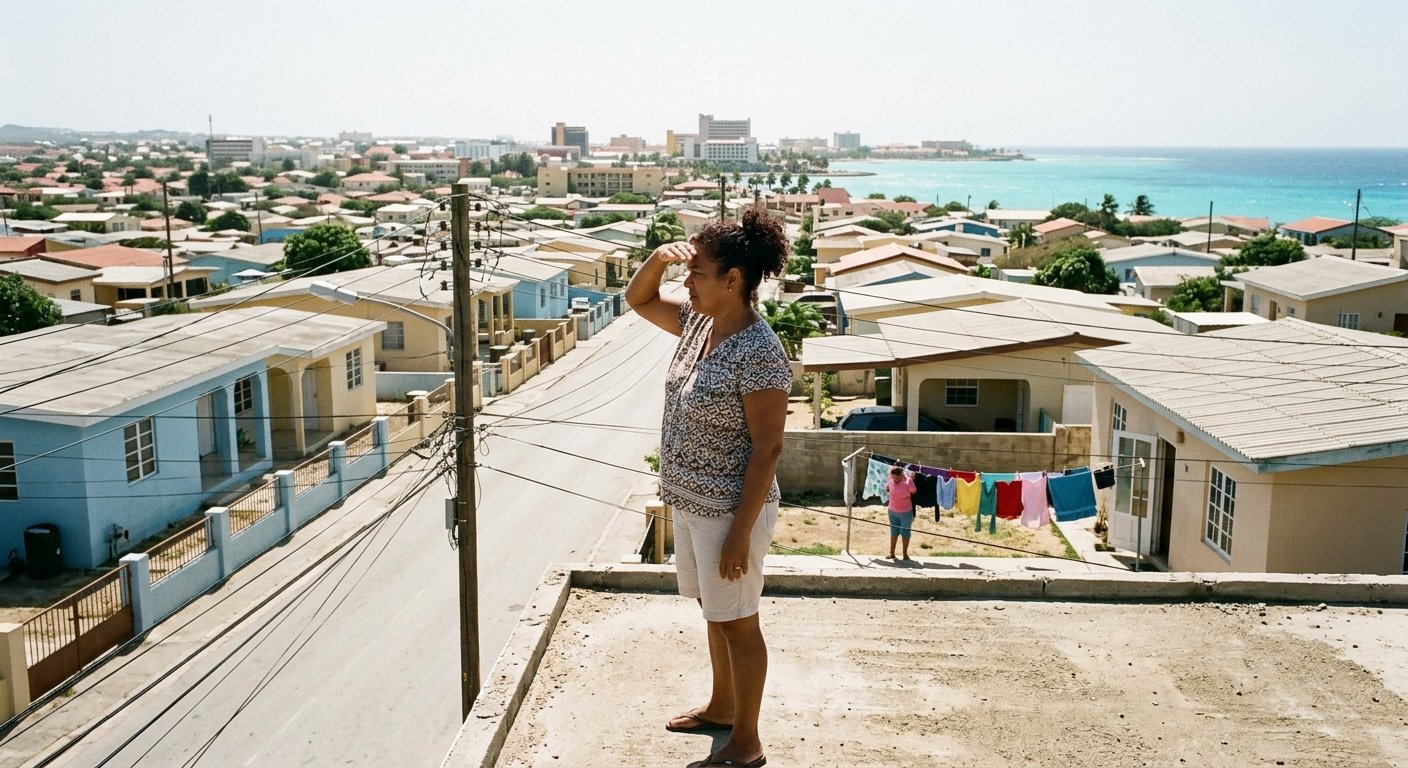
In Aruba, electricity costs rank among the highest in the Caribbean region. According to the International Energy Agency, island communities consistently pay premium rates for electricity due to their dependence on imported fossil fuels. Every kilowatt-hour (kWh) you consume in Oranjestad costs more than it would in most other places — which is actually great news for solar energy assessment in Aruba, because it means every kWh you generate yourself saves you more money.
Every kWh your system produces is a kWh you are not paying WEB for at the full tariff rate.
Breaking Down Your WEB Aruba Bill
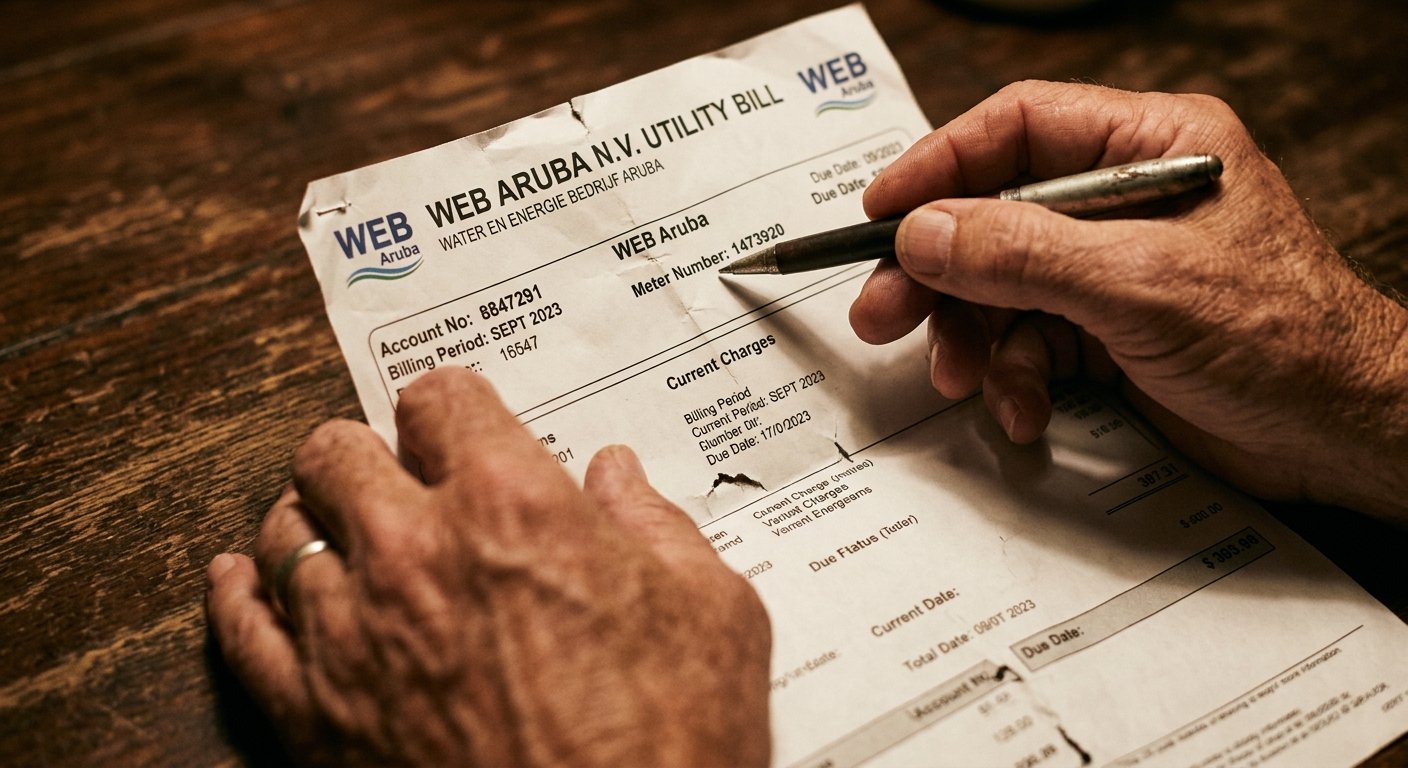
1. Account and Meter Information
At the top of your bill, you will find your account number, meter number, and service address. These seem basic, but your meter number links your consumption history — data that solar consultants in the Caribbean use to analyze your usage patterns over time. If you have access to 12 months of bills, bring all of them. Seasonal variation in Aruba is subtle, but air conditioning usage shifts throughout the year, and a fuller picture always leads to a better system design.
2. Meter Readings: Previous vs. Current
Your bill shows two meter readings: the reading at the start of the billing period and the reading at the end. The difference between these two numbers is your monthly consumption in kilowatt-hours (kWh). For example, if your previous reading was 14,200 kWh and your current reading is 14,650 kWh, you consumed 450 kWh that month. This single number — your monthly kWh usage — is the foundation of every solar system sizing calculation. Residential solar panels in the Caribbean are sized to offset this consumption as accurately as possible.
If your previous reading was 14,200 and your current reading is 14,650, you consumed 450 kWh that month. Write this number down before your consultation — it is the first thing your solar specialist will ask for.
3. The Base Tariff (Commodity Charge)
This is the core charge for the electricity you actually used, calculated by multiplying your kWh consumption by WEB Aruba’s current base tariff rate. This rate is set by regulation and updated periodically by WEB NV (Water en Energiebedrijf Aruba), the island’s utility provider. When you go solar, this is the charge most directly reduced by the energy your panels generate.
4. The Fuel Clause Adjustment (Brandstoftoeslag)
This line item is one of the most important — and most often overlooked. The fuel clause adjustment reflects fluctuating global oil prices, since WEB Aruba generates most of its electricity from fuel oil. This charge can swing significantly from month to month based on international energy markets.
This volatility is one of the strongest arguments for solar energy savings in Aruba. Once your panels are installed, you are generating your own electricity from sunlight — a resource that has no fuel clause, no international price fluctuation, and no supply chain risk. Your energy costs become predictable, often for the next 25 years.
The fuel clause adjustment can swing significantly from month to month. It is the most unpredictable cost on your bill and the one solar energy eliminates most completely — making long-term budgeting far more reliable.
5. Fixed Monthly Charges
Beyond what you consume, your bill includes fixed charges: a basic service fee for maintaining your connection to the grid, and sometimes a meter rental or infrastructure charge. These fees are typically modest and remain on your bill even after going solar, since you stay connected to WEB Aruba’s grid (unless you choose an off-grid system). Understanding that these charges persist helps you set accurate expectations about your post-solar electricity bill.
If energy independence with minimal grid reliance appeals to you, our off-grid solar solutions page explores how battery storage and system sizing can work together to reduce even those fixed grid charges.
6. Taxes and Government Levies
Your total includes applicable Aruban taxes. These are non-negotiable government charges applied to your consumption and may include turnover tax (BBO) components. The more consumption you offset with solar, the lower the taxable utility amount — another layer of residential solar energy savings that compounds over time.
The Three Numbers That Define Your Solar Opportunity
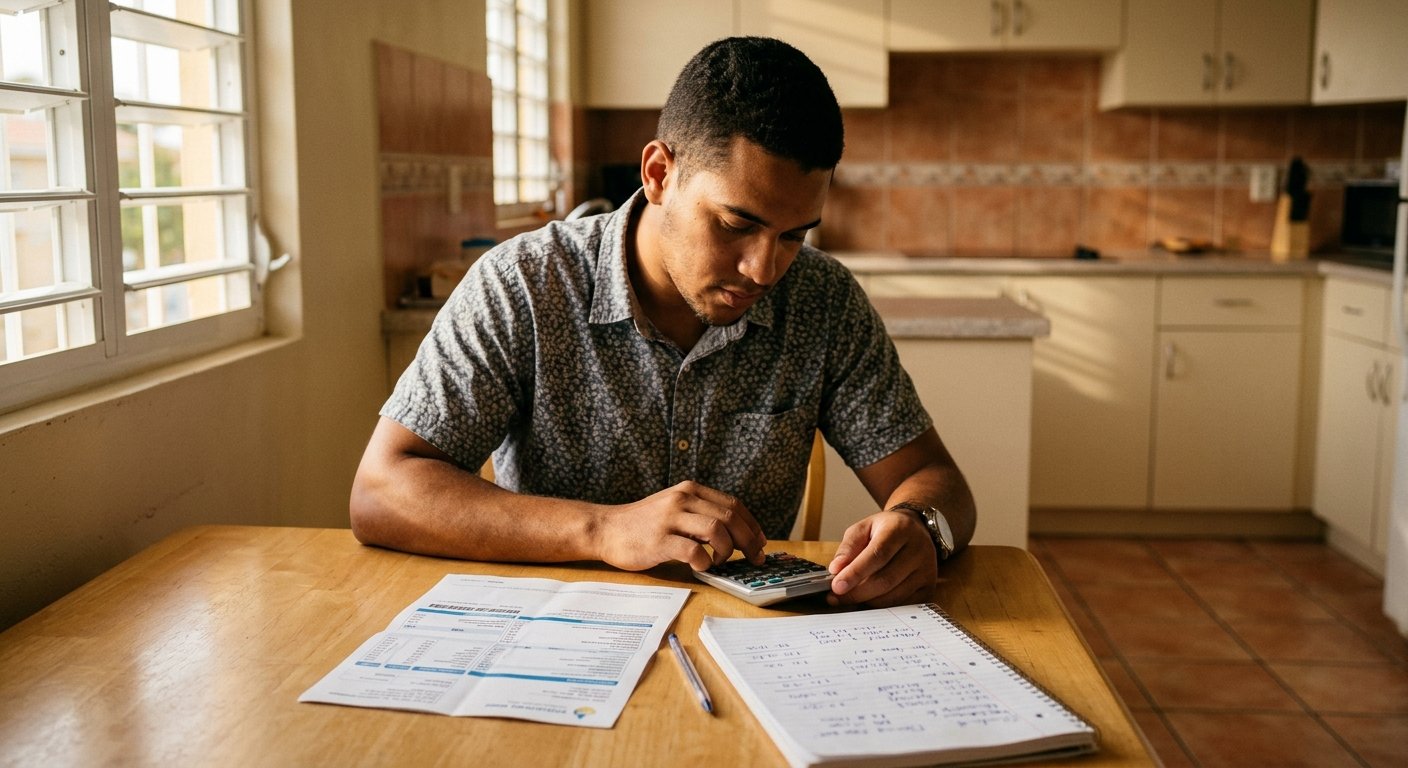
When B Energy’s team conducts a solar energy assessment in Aruba, we focus on three key figures from your bill.
- Monthly kWh consumption: How much electricity your household or business uses on average each month.
- Total monthly bill amount: Your all-in cost, including base tariff, fuel clause, fixed fees, and taxes.
- Peak usage months: Which months show the highest consumption, often tied to air conditioning patterns.
These three numbers allow our Caribbean solar energy specialists to calculate the ideal system size for your property. Getting the sizing right is where local expertise makes the real difference.
How Solar Changes Your Bill Going Forward
Once your solar system is operational and connected to WEB Aruba’s grid, your meter readings will show dramatically lower net consumption because your panels are generating electricity during daylight hours — the peak of both your usage and the sun’s intensity. Depending on your system size, consumption patterns, and any net metering arrangements available through WEB Aruba, your monthly bill can drop significantly.
For homeowners ready to take the next step, our residential solar systems page explains the full design and installation process. Business owners can explore how solar transforms commercial operating costs on our commercial solar solutions page.
What to Bring to Your Solar Consultation
Preparing for a solar consultation in the Caribbean takes less than 15 minutes if you have your bills organized. Here is what helps most:
Gather 12 months of WEB Aruba bills
Physical or digital copies both work. A full year captures seasonal air conditioning shifts and gives your consultant the most accurate usage picture.
Note any major appliances you plan to add
New AC units, pool pumps, or other large loads will affect your future consumption — flag them so the system can be sized accordingly.
Clarify your budget and backup priorities
Know roughly what you want to spend and whether battery backup is a priority. This shapes system design from the start.
Share any expansion plans (commercial owners)
If your business is growing, your energy needs will grow too. A future-ready system design saves you from costly upgrades later.
The more context you share, the more accurately a solar consultant can design a system that truly serves your life — not just a system that looks good on paper.
Frequently Asked Questions
What is the most important number on my Aruba electricity bill for solar sizing?
Your monthly kilowatt-hour (kWh) consumption is the most critical figure. It tells solar consultants how much energy your home or business uses, which directly determines the size and number of solar panels needed to offset your usage effectively.
Will my electricity bill disappear completely after going solar?
Most homeowners see a substantial reduction in their electricity bills after going solar. However, fixed charges like basic service fees and applicable taxes typically remain, since you stay connected to the WEB Aruba grid. The goal is meaningful, lasting savings — not an overpromised zero bill.
How does the fuel clause adjustment affect solar savings in Aruba?
The fuel clause adjustment fluctuates with global oil prices and can increase your bill significantly in some months. Solar energy insulates you from this volatility. Every kWh your panels generate is one less kWh subject to fuel clause increases, making your energy costs far more predictable over time.
How many months of electricity bills should I bring to a solar energy assessment in Aruba?
Ideally, bring 12 months of bills. This gives your solar consultant a complete picture of seasonal usage patterns and helps them design a system sized for your actual energy needs throughout the year — not just one snapshot month.
What system size do I need for a typical Aruba home?
System size depends on your specific kWh consumption, roof space, and energy goals. Residential systems commonly range from 5 to 20+ kWp for homes in Oranjestad. A proper solar energy assessment is the only way to determine the right fit for your property — and it starts with your electricity bill.
Your Bill Is the Beginning, Not the End
Reading your Aruba electricity bill with fresh eyes is not just a budgeting exercise — it is the first act of energy independence. Every line item tells part of the story of how much you are paying, why you are paying it, and how solar can rewrite that story for the better.
At B Energy, our Caribbean solar energy specialists work with Oranjestad homeowners and businesses to turn that bill into a blueprint for a brighter, more sustainable future. Whether you are curious about solar panels cost in Aruba or ready to schedule a full solar energy assessment, the conversation starts with your numbers — and we are here to help you understand every one of them.
Ready to find out what your bill is really telling you?
Contact B Energy today for a no-obligation solar consultation in Aruba — bring your bills and we will handle the rest.

About B Energy
B Energy is a mission-driven solar energy company serving Caribbean homeowners and businesses in Aruba and surrounding islands. We specialize in designing and installing residential and commercial solar systems (5-100+ kWp) optimized for tropical climates, coastal environments, and hurricane resilience. Our community-focused approach combines proven ROI (3-5 year payback), energy independence solutions, and environmental stewardship, empowering island residents to lower electricity costs while contributing to a sustainable Caribbean future. Visit b-energy.life →