
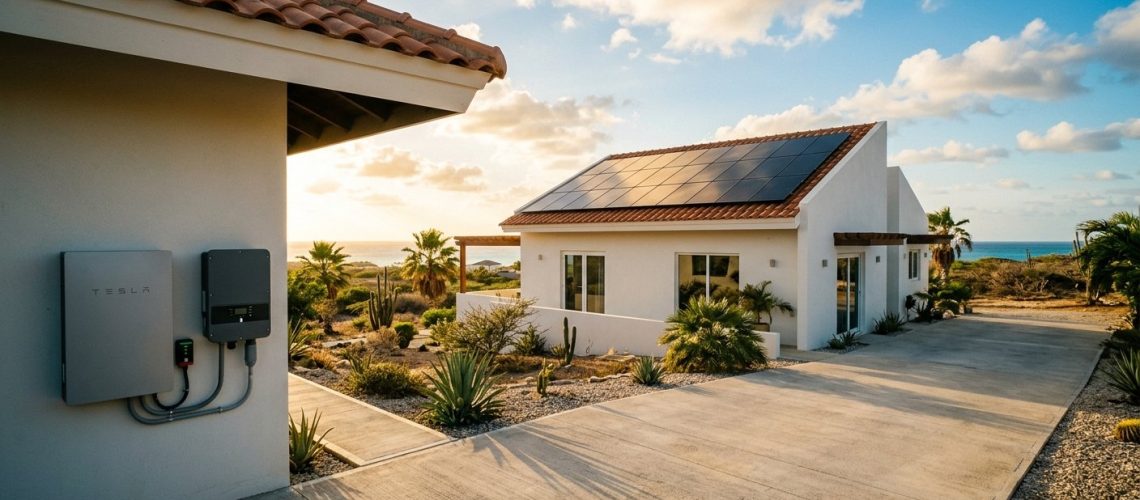
Designing a complete off-grid solar system for an Aruba home means sizing your panels, battery bank, and inverter to match your actual energy consumption—independent of the utility grid entirely. For most Aruba households, a well-designed standalone solar system between 5 and 20 kWp can power everything from air conditioning to appliances, with a typical return on investment within 3 to 5 years.
- Off-grid solar design follows a clear sequence: audit your energy use, size your components, plan your battery storage, then install and commission.
- Aruba’s consistent sunshine (averaging over 8 peak sun hours daily) makes it one of the best locations in the world for standalone solar systems.
- Coastal conditions in Oranjestad require corrosion-resistant materials and proper mounting to protect your investment long-term.
- Battery storage is the most critical component of any off-grid solar design—undersizing it is the most common and costly mistake.
- B Energy specializes in designing off-grid solar systems sized from 5 to 100+ kWp, tailored specifically for Aruba homes and businesses.
Why Off-Grid Solar Makes Sense in Aruba
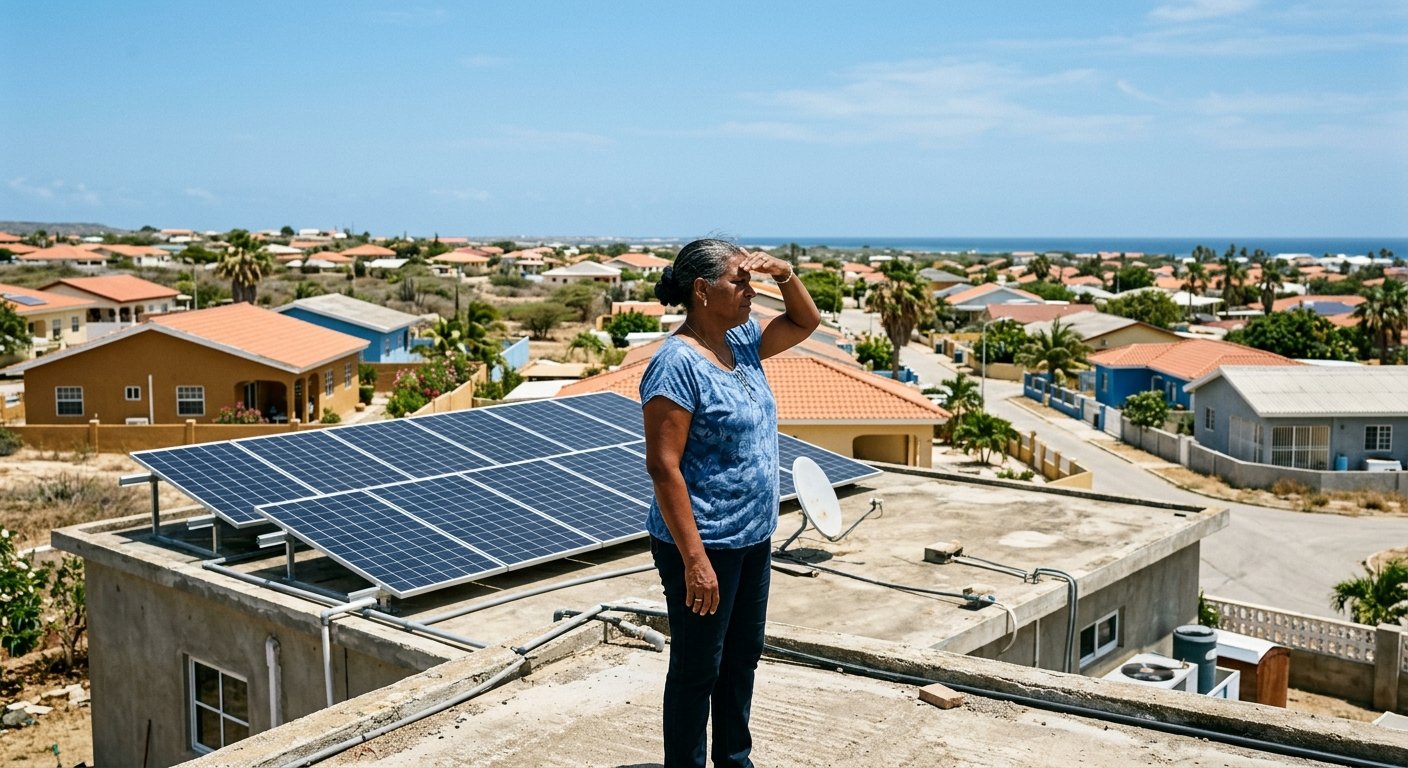
Electricity costs in Aruba consistently rank among the highest in the Caribbean. For homeowners in Oranjestad, monthly utility bills can consume a significant portion of household income—and rates have only trended upward. At the same time, Aruba sits at approximately 12 degrees north of the equator, receiving abundant, reliable sunshine nearly year-round. That combination of high grid costs and exceptional solar resources creates a compelling case for complete off-grid solar independence.
Beyond the financial math, there’s something deeply meaningful about generating your own power on an island. Energy independence isn’t just an economic concept—it’s a statement about community resilience and environmental stewardship. When Aruba homes and businesses shift to off-grid solar systems, they reduce the island’s dependence on imported fossil fuels, lowering both costs and carbon emissions for everyone.
Step-by-Step: Designing Your Off-Grid Solar System
A successful off-grid solar design isn’t guesswork—it’s a structured process that begins with understanding your home’s real energy needs and ends with a system that powers your life reliably, day and night. Here’s how B Energy approaches every residential design in Aruba.
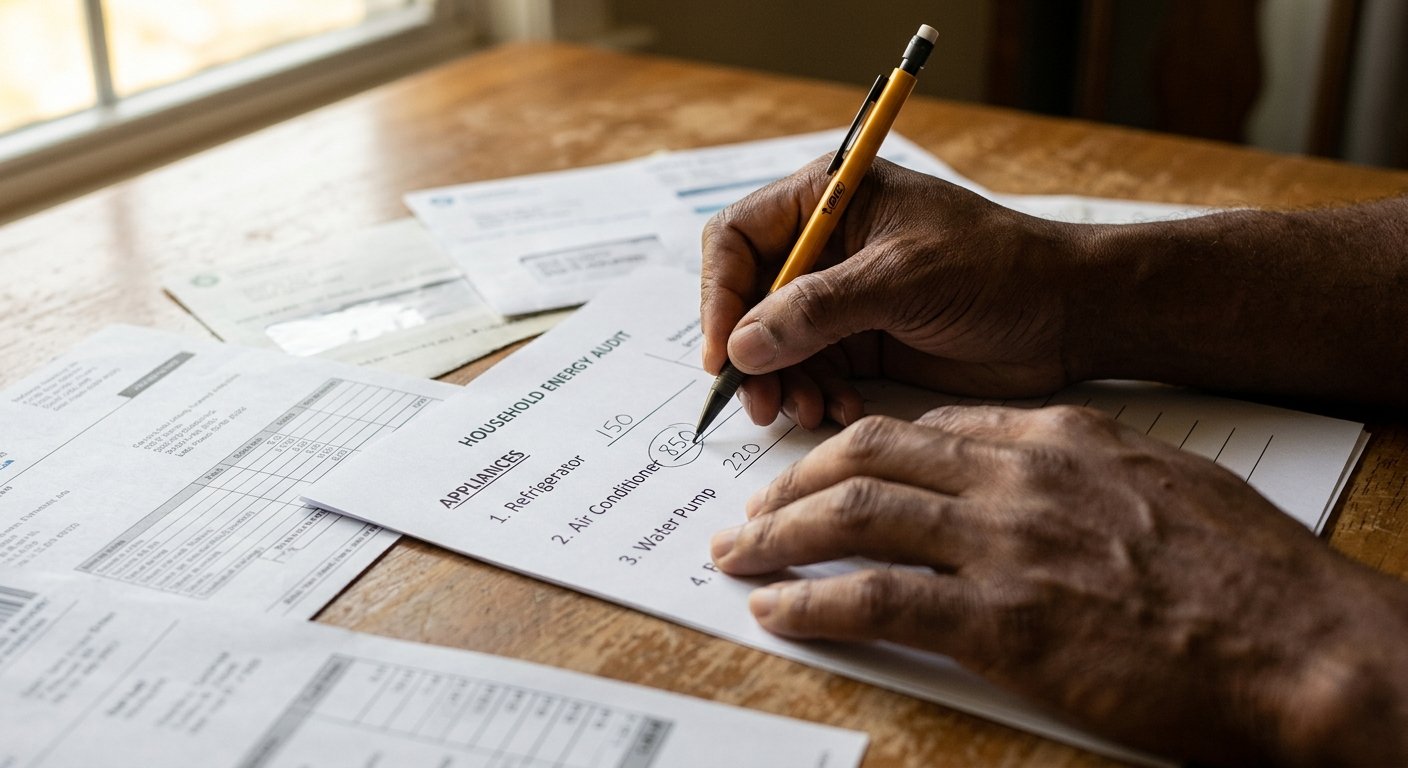
Energy Audit: Know What You’re Powering
Before any panels are specified, you need a clear picture of your energy consumption. This means cataloguing every appliance—air conditioners, refrigerators, water pumps, lighting, electronics—and estimating how many hours each runs daily. Your recent electricity bills provide a useful baseline in kilowatt-hours (kWh). A thorough audit often reveals easy efficiency wins that reduce system size and cost before a single panel is purchased.
Solar Array Sizing: Matching Panels to Load
Once your daily kWh consumption is known, your solar array is sized to generate that amount—plus a buffer for system inefficiencies and cloudy days. Aruba’s exceptional solar irradiance means fewer panels are needed compared to locations farther from the equator. Most Aruba residences fall in the 5 to 20 kWp range, though larger homes or those with heavy air conditioning loads may require more capacity.
Battery Bank Sizing: Your Overnight Lifeline
In a standalone solar system, batteries store daytime energy for nighttime and overcast-day use. Battery sizing is expressed in usable kWh and should cover at least one to two days of autonomy for your household. Modern lithium iron phosphate (LiFePO4) batteries are the preferred choice—they offer longer cycle life, higher efficiency, and safer chemistry than older lead-acid options. This is the most critical component to get right; an undersized battery bank is the single most common design failure.
Inverter and Charge Controller Selection
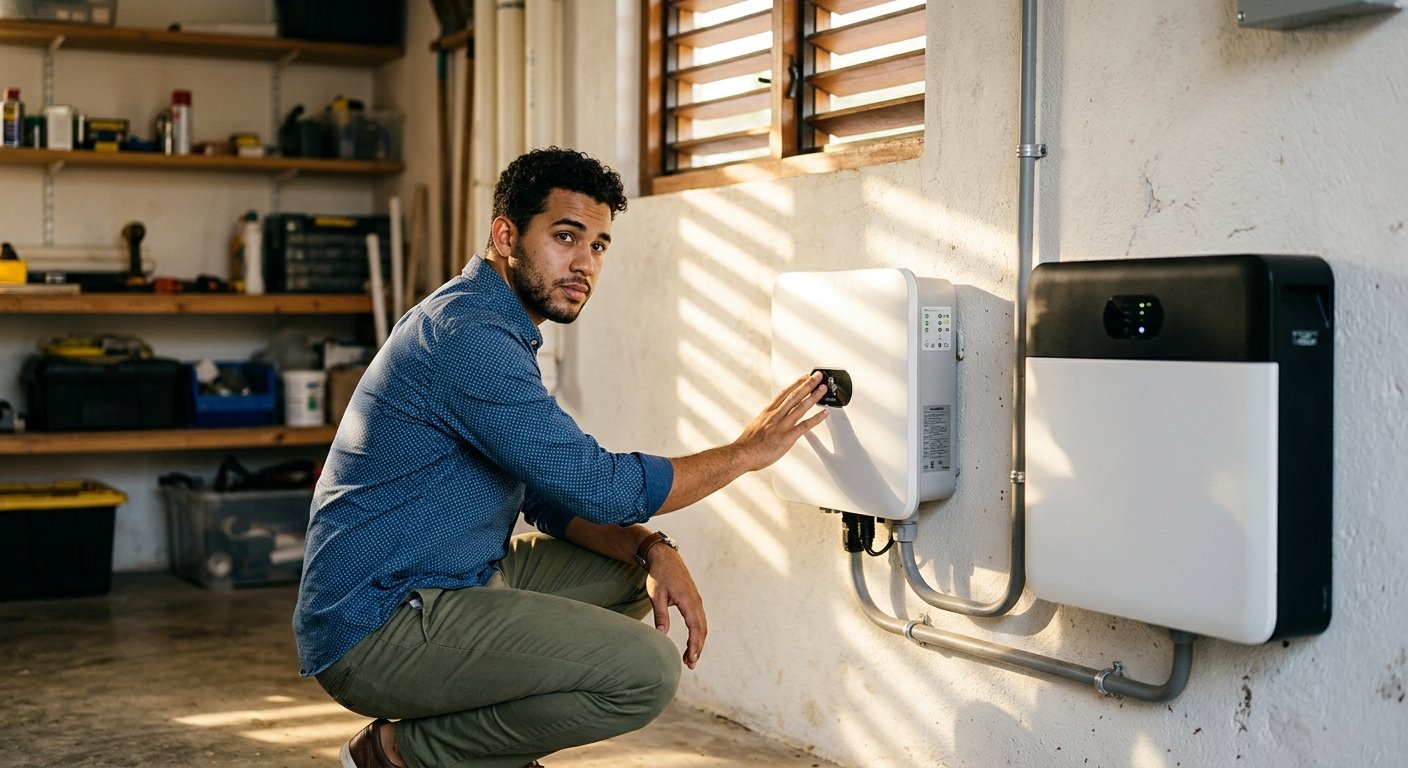
The inverter converts DC power from your panels and batteries into the AC electricity your home uses. For off-grid solar design, a hybrid inverter/charger is typically specified—it manages solar input, battery charging, and AC output simultaneously. A quality charge controller (MPPT type) maximizes the energy harvested from your panels throughout the day. These components must be matched carefully to your array and battery specifications.
Coastal Adaptation: Designing for Aruba’s Environment
Oranjestad’s salt air and coastal humidity demand materials and installation practices suited to the tropics. This means marine-grade wiring, corrosion-resistant mounting hardware, and enclosures rated for high-humidity environments. Panel orientation and tilt are also optimized for Aruba’s latitude to maximize annual energy production. Every detail of the physical installation matters for long-term system reliability.
Installation, Commissioning, and Monitoring
Professional installation ensures your off-grid solar components are wired safely, grounded correctly, and protected by appropriate fusing and disconnect systems. After installation, the system is commissioned—tested under load to confirm all components are performing as designed. Modern systems include remote monitoring, so you can track your solar production, battery state of charge, and energy consumption from your phone.
Before finalizing your system design, switch out incandescent bulbs for LEDs and consider an inverter-type air conditioner if you haven’t already. These two changes alone can reduce your system size requirements by 20–30%, directly lowering your upfront investment.
Comparing Off-Grid and Grid-Tied Solar for Aruba Homes
Not every homeowner needs complete energy independence. Understanding the difference between off-grid and grid-tied systems helps you choose the right path for your situation and goals.
| Consideration | Off-Grid Solar | Grid-Tied Solar |
|---|---|---|
| Utility bill elimination | Full independence possible | Reduced bills, still connected |
| Battery storage required | Yes — essential | Optional |
| Power during grid outages | Yes | No (without battery backup) |
| Upfront investment | Higher (battery cost) | Lower |
| Best for | Energy independence seekers | Cost reduction priority |
| ROI timeline | 3–5 years typical | 3–5 years typical |
For Aruba homeowners who experience frequent grid interruptions or who want complete energy autonomy, a complete off-grid solar system offers unmatched peace of mind. Those prioritizing the lowest initial investment while still reducing bills may consider a grid-tied residential solar approach instead.
Energy independence isn’t just an economic concept—it’s a statement about community resilience and environmental stewardship.
Key Off-Grid Solar Components Explained Simply
Understanding your system doesn’t require an engineering degree. Here’s a plain-language summary of the essential off-grid solar components that work together to power your home:
- Solar panels: Capture sunlight and convert it to DC electricity. Quality matters—look for panels with proven performance warranties and salt-mist resistance ratings for coastal environments.
- MPPT charge controller: The “brain” that optimizes power transfer from panels to batteries, maximizing what you harvest from every hour of Aruba sunshine.
- Battery bank: Your energy reservoir. Stores what the panels produce during the day so your home stays powered after sunset.
- Inverter/charger: Converts stored DC power to the AC electricity your appliances use, and manages the overall system flow.
- Monitoring system: Lets you see your production, storage, and consumption in real time—knowledge that helps you use energy smarter.
- Safety components: Fuses, breakers, surge protection, and proper grounding protect your investment and your family.
According to the International Renewable Energy Agency (IRENA), the cost of solar photovoltaic systems has fallen by over 90% since 2010, making off-grid solar more accessible than ever for island communities. Meanwhile, the International Energy Agency projects solar to be the dominant source of new electricity generation globally through the decade ahead—a trend that’s especially powerful for sun-rich islands like Aruba.
What to Expect: Timeline and Investment
From initial consultation to a fully operational off-grid solar system, most Aruba residential installations follow a 4 to 8 week timeline, depending on system complexity and component availability. The investment varies with system size, but the 3 to 5 year payback period holds true across most residential configurations when Aruba’s high electricity rates are factored in. Over a 25-year panel lifespan, the savings are transformational.
B Energy’s community-focused solar solutions include a complete design consultation, professional installation, and post-installation support—because a solar system should be a long-term relationship, not a one-time transaction.
Frequently Asked Questions
How do I know what size off-grid solar system I need for my Aruba home?
Start with your average monthly electricity consumption from your utility bills, expressed in kWh. A professional energy audit refines this further by accounting for each appliance’s actual usage. From that baseline, a qualified solar designer like B Energy sizes your array, battery bank, and inverter to meet your needs reliably in Aruba’s specific solar conditions.
Are off-grid solar systems reliable enough for full-time home use in Aruba?
Yes—Aruba’s consistent sunshine makes it one of the most reliable locations in the world for standalone solar systems. With properly sized battery storage providing one to two days of autonomy and quality components rated for tropical coastal conditions, off-grid solar can power your home reliably year-round.
How long do off-grid solar batteries last in Aruba’s climate?
Modern lithium iron phosphate (LiFePO4) batteries typically last 10 years or more, even in tropical heat, when properly installed and managed by a quality battery management system. Older lead-acid batteries have shorter lifespans in high-temperature environments, which is why B Energy recommends lithium chemistry for Aruba installations.
Does an off-grid solar system require maintenance?
All solar systems benefit from periodic maintenance—typically an annual inspection of panel cleanliness, electrical connections, mounting hardware, and battery health. Aruba’s dust and salt air mean keeping panels clean is especially important for maintaining peak output. B Energy recommends scheduling regular check-ups to protect your investment over the long term.
Can businesses also use off-grid solar design in Aruba?
Absolutely. B Energy designs and installs commercial off-grid and hybrid solar systems ranging up to 100+ kWp for businesses across Oranjestad. A commercial solar solution follows the same design principles—energy audit, system sizing, battery storage planning—scaled to commercial energy demands and operational requirements.
Ready to Design Your Off-Grid Solar System?
Connect with B Energy’s Caribbean solar specialists for a personalized off-grid solar design consultation tailored to your Aruba home or business.

About B Energy
B Energy is a mission-driven solar energy company serving Caribbean homeowners and businesses in Aruba and surrounding islands. We specialize in designing and installing residential and commercial solar systems (5-100+ kWp) optimized for tropical climates, coastal environments, and hurricane resilience. Our community-focused approach combines proven ROI (3-5 year payback), energy independence solutions, and environmental stewardship, empowering island residents to lower electricity costs while contributing to a sustainable Caribbean future. Visit b-energy.life →