
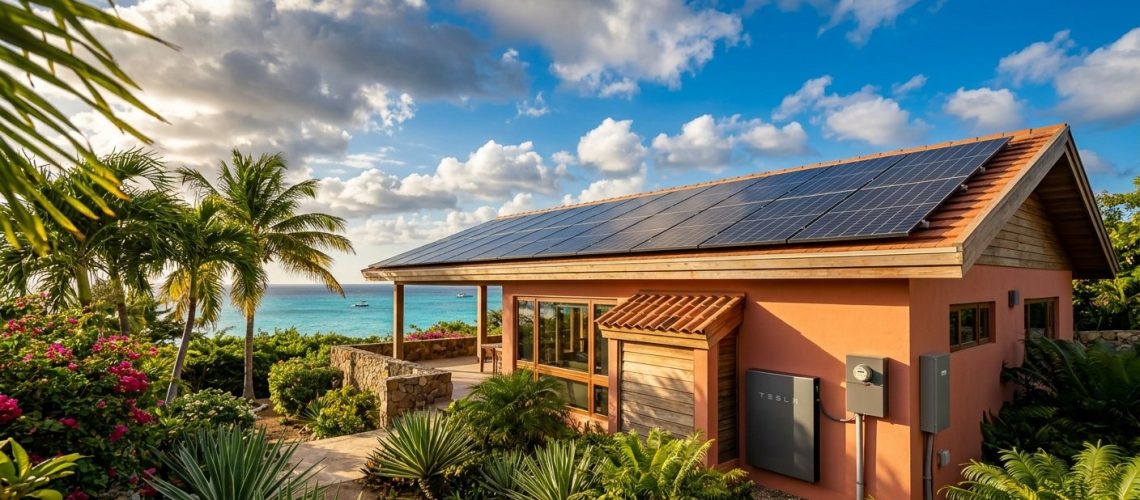
Hybrid solar systems — combining rooftop solar panels with battery storage — are an excellent fit for most Aruba homes. They let you generate your own electricity, store what you don’t immediately use, and draw from the grid only when needed. For homeowners dealing with high utility costs and the desire for genuine energy independence, a well-sized hybrid system typically delivers a payback period of three to five years.
- A hybrid solar system pairs solar panels with battery storage, giving you power day and night without full grid dependence.
- Aruba’s consistent sunshine makes solar-plus-storage one of the most cost-effective energy choices on the island.
- Residential systems typically range from 5 to 30 kWp; commercial systems scale to 100 kWp and beyond.
- Most homeowners in Aruba see a return on investment within three to five years.
- Coastal installation considerations — such as corrosion-resistant mounting and sealed battery enclosures — are essential for long-term performance.
What Is a Hybrid Solar System?
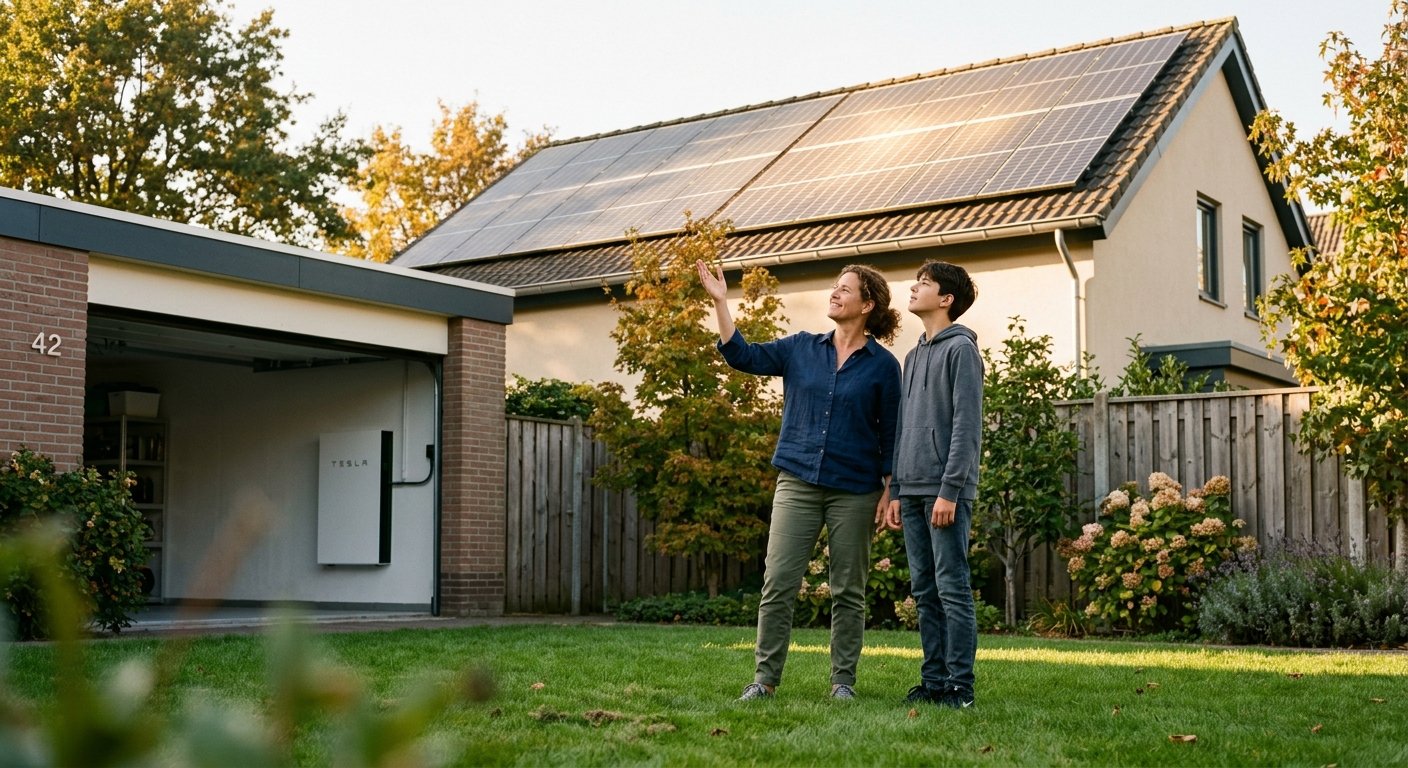
A hybrid solar system is the sweet spot between two older approaches: a pure grid-tied system (solar panels feeding directly into the utility grid) and a fully off-grid setup (solar plus large battery banks with no grid connection at all). In a hybrid configuration, your panels generate electricity during daylight hours, your batteries absorb the surplus, and the grid acts as a reliable backup rather than your primary power source.
Think of it like a well-stocked pantry. You cook with what you grow (solar generation), preserve what you can’t eat immediately (battery storage), and visit the grocery store only when you truly run short (grid power). The result is a home that runs predominantly on clean, self-produced energy — and an electricity bill that reflects that shift dramatically.
If you already have a grid-tied solar system on your Aruba home, upgrading to a hybrid setup by adding battery storage is often more cost-effective than a full replacement. Ask a Caribbean solar specialist to assess your existing inverter compatibility before purchasing new equipment.
Why Aruba Is Ideal for Solar-Plus-Storage
Aruba sits just outside the main hurricane belt and enjoys some of the most reliable sunshine in the Caribbean — on average more than 2,800 sun hours per year. That consistency is the engine of every solar investment on the island. Unlike locations where cloud cover or seasonal variation reduces output significantly, Aruba’s solar resource is predictable, which means your system’s performance projections are far more accurate and your payback timeline more dependable.
High electricity tariffs compound the financial case. Aruba’s grid electricity, supplied primarily through fossil fuel generation, carries costs that make solar generation genuinely competitive — and battery storage even more attractive. Every kilowatt-hour you produce and store is one you don’t purchase at utility rates. For families running air conditioning, water heaters, and modern appliances, the monthly difference can be substantial.
Every kilowatt-hour you generate and store at home is one less you purchase — and on an island where electricity isn’t cheap, that math adds up fast.
The International Renewable Energy Agency (IRENA) consistently reports that solar photovoltaic generation has become the lowest-cost source of new electricity in most of the world. For island utilities still heavily reliant on imported fuel, that cost gap is even more pronounced — making the case for community-wide solar adoption in places like Oranjestad compelling at every level.
How Hybrid Systems Address Aruba’s Unique Challenges

Energy Independence and Grid Reliability
Grid outages, even brief ones, disrupt daily life — refrigerators warm up, home offices go dark, medical equipment loses power. A properly designed hybrid solar system with adequate battery capacity keeps your essential loads running through interruptions. This is one of the most valued features our clients in Oranjestad mention after installation: the quiet confidence of knowing their home keeps functioning regardless of what’s happening on the grid.
Coastal and Tropical Durability
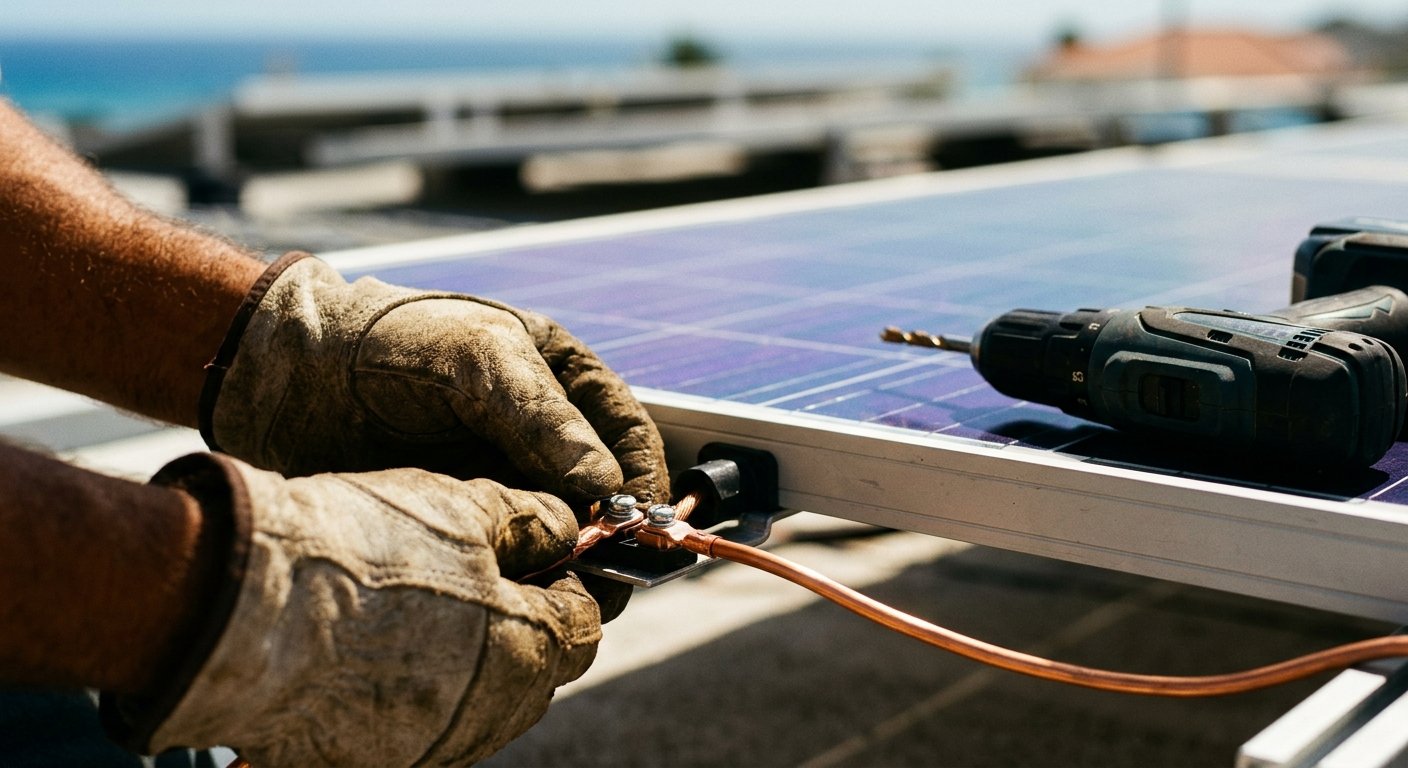
Installing solar near the sea introduces specific engineering considerations. Salt air is corrosive, and Aruba’s trade winds carry it year-round. Quality hybrid installations for island homes use marine-grade mounting hardware, corrosion-resistant racking systems, and battery enclosures rated for humid tropical environments. Panel selection also matters — look for modules with strong salt mist corrosion certifications in line with IEC 61701 standards, which specifically test photovoltaic modules under salt mist conditions.
As Caribbean solar energy specialists, our team factors all of these variables into every system design. A system built for a Dutch suburb and a system built for coastal Aruba are not the same system — and the difference shows up in performance and longevity.
| System Type | Grid-Tied Only | Hybrid (Solar + Battery) |
|---|---|---|
| Works during grid outages | No | Yes |
| Stores surplus energy | No | Yes |
| Reduces grid dependence | Partial | Significant |
| Upfront cost | Lower | Moderate to higher |
| ROI timeline (Aruba) | 3–5 years | 3–5 years |
| Long-term energy security | Low | High |
Sizing a Hybrid System for Your Home
System size is the most important variable in ensuring your investment performs. Residential hybrid systems in Aruba typically start around 5 kWp for smaller homes and scale to 20–30 kWp for larger properties with higher consumption. Battery capacity is sized to cover your evening and overnight needs — the hours when solar panels aren’t generating.
Energy audit
A specialist reviews your electricity bills and identifies your peak consumption hours, seasonal patterns, and the appliances driving your usage.
System design
Solar array size, battery capacity, and inverter specifications are matched to your energy profile and roof characteristics.
Coastal assessment
Mounting orientation, wind load calculations, and material selections are reviewed for Aruba’s tropical coastal conditions.
Installation and commissioning
Your system is installed, tested, and connected. You receive a monitoring walkthrough so you can track generation and storage in real time.
Ongoing performance review
Periodic checks ensure the system continues performing at design specifications — panels cleaned, connections inspected, battery health monitored.
For businesses in Oranjestad exploring solar battery storage for commercial properties, the same methodology applies at larger scale. Our commercial solar solutions page covers system sizing from 30 kWp to 100 kWp and beyond, including how to layer battery storage into an existing commercial operation for maximum ROI.
Battery storage technology has advanced significantly. Modern lithium iron phosphate (LFP) batteries offer longer cycle life and better thermal stability in warm climates compared to older lithium chemistries — an important consideration when your battery enclosure sits in Aruba’s heat year-round.
The Financial Case: ROI and Long-Term Value
The question most homeowners ask first is simple: will this pay for itself? For most Aruba households, the answer is yes — and within a realistic timeframe. The combination of high local electricity costs, Aruba’s strong solar resource, and falling solar hardware prices has compressed payback periods to three to five years for well-designed residential systems. After that point, the energy your system generates is effectively free.
Battery storage adds upfront cost but also adds value: it extends the hours during which you run on self-generated power, reduces what you owe the utility, and gives you resilience that grid-only solar cannot provide. For homeowners considering the full picture — not just the hardware price, but the decade of savings that follows — the math is compelling. Explore the specifics of residential system sizing and payback scenarios on our residential solar systems page.
The National Renewable Energy Laboratory (NREL) tracks global solar system costs and confirms the continuing downward trend in installed solar prices — a trend that makes 2026 a particularly strong moment to invest before electricity rates trend further upward.
Frequently Asked Questions
Can a hybrid solar system power my entire home in Aruba?
For most homes, a properly sized hybrid system covers the majority of daily electricity needs. Full coverage depends on system size, battery capacity, and your household’s consumption patterns. An energy audit helps determine realistic coverage before you invest.
How long do solar batteries last in a tropical climate?
Modern lithium iron phosphate batteries are well-suited to warm environments and typically carry manufacturer warranties of ten years or more. Proper installation with adequate ventilation and shade protection extends real-world performance significantly in Aruba’s conditions.
What happens to my hybrid system during a grid outage?
A hybrid system with battery storage can continue powering your home during outages by automatically switching to battery and solar power. The scope of backup coverage depends on battery capacity and which loads you prioritize — your system designer will help you plan for this.
Is a hybrid system more expensive than a standard solar installation?
Yes, the upfront cost is higher because battery storage adds to the hardware budget. However, the added energy independence, outage protection, and increased self-consumption typically improve the long-term value proposition and can shorten the effective payback period when electricity prices are high.
Do I need to replace my existing solar panels to go hybrid?
Not necessarily. Many existing grid-tied systems in Aruba can be upgraded by adding a compatible hybrid inverter and battery bank. A specialist assessment of your current inverter and panel array determines whether a retrofit or a fresh installation makes more sense for your situation.
A Sustainable Future for Oranjestad — One Home at a Time
Solar energy is more than a financial decision. Every home in Oranjestad that generates its own clean electricity reduces the island’s dependence on imported fossil fuels, lowers its carbon footprint, and strengthens the community’s collective energy resilience. When neighbors make this shift together, the impact multiplies — and the island moves meaningfully toward the sustainable future its people deserve.
Community-focused solar solutions are at the heart of what we do at B Energy. We’re not here to sell hardware; we’re here to help families and businesses in Aruba take genuine control of their energy future. That means honest system design, transparent ROI conversations, and installations built to perform in real Caribbean conditions for decades. You can also learn more about our battery storage and hybrid energy options to see how storage technology integrates into a complete solar solution.
Ready to explore hybrid solar for your home?
Connect with B Energy’s Caribbean solar specialists for a no-pressure consultation tailored to your home, your energy use, and your goals in Oranjestad.

About B Energy
B Energy is a mission-driven solar energy company serving Caribbean homeowners and businesses in Aruba and surrounding islands. We specialize in designing and installing residential and commercial solar systems (5-100+ kWp) optimized for tropical climates, coastal environments, and hurricane resilience. Our community-focused approach combines a typical 3-5 year payback, energy independence solutions, and environmental stewardship, empowering island residents to lower electricity costs while contributing to a sustainable Caribbean future. Visit b-energy.life →