
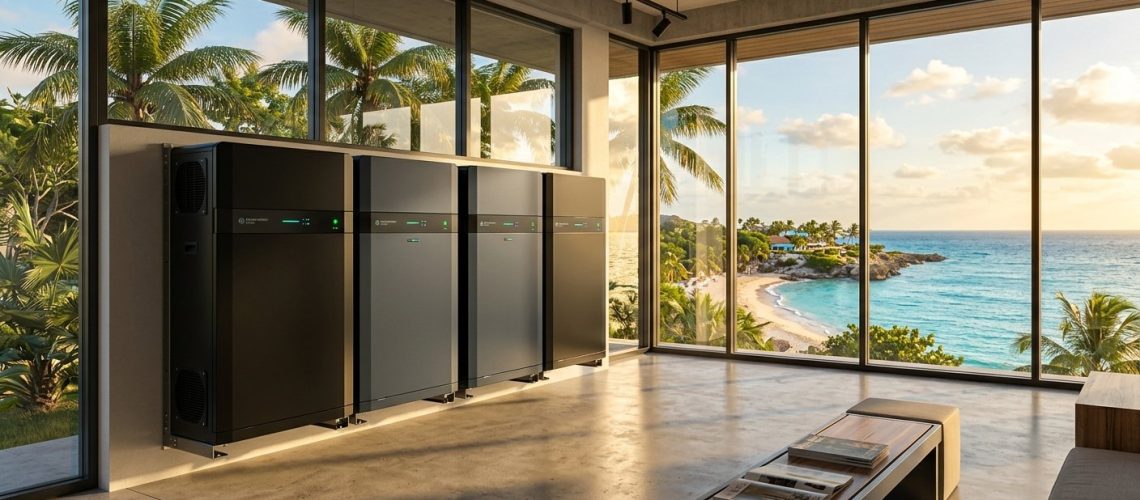
Battery storage protects Caribbean businesses from outages by storing solar energy and delivering it automatically the moment grid power fails—with no gap, no generator fumes, and no lost revenue. For businesses in Aruba, where electricity costs run among the highest in the region, pairing a solar array with a battery system transforms energy from a vulnerability into a competitive advantage.
- Battery storage activates instantly during grid outages, keeping operations running without interruption.
- Hybrid solar-plus-storage systems can significantly reduce peak demand charges on commercial electricity bills.
- A properly sized system (5–100+ kWp) is tailored to your business load, not a one-size-fits-all solution.
- Aruba’s abundant sunshine makes solar batteries extraordinarily effective at staying charged year-round.
- ROI on solar-plus-storage commercial systems in the Caribbean typically falls within a 3–5 year window.
Why Outages Hit Island Businesses Harder
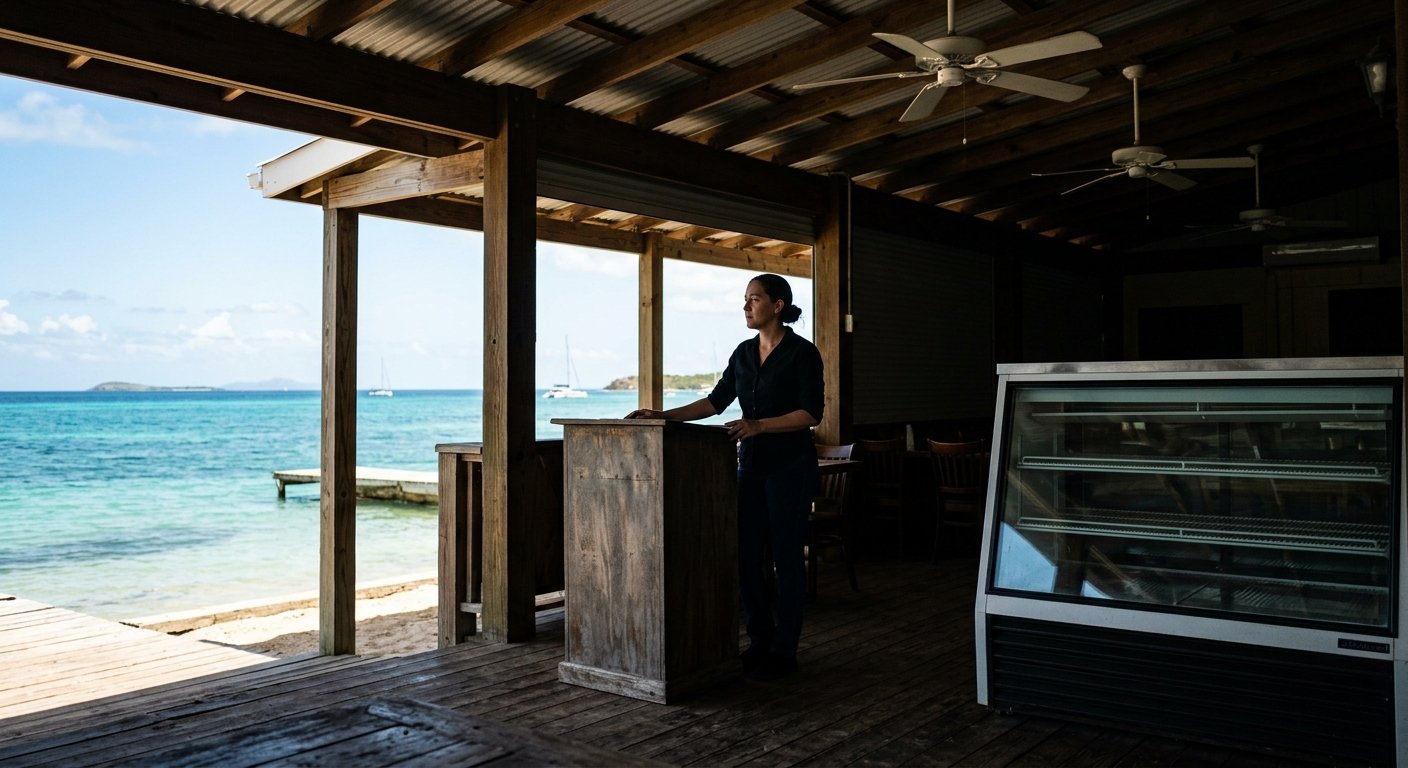
On the mainland, a business that loses power for a few hours might be inconvenient. On an island like Aruba, the consequences scale differently. Perishable inventory spoils. Point-of-sale systems go dark. Hospitality guests check out early. Every hour of downtime carries a dollar cost that compounds quickly—and because Aruba’s grid is an isolated system, restoration can take longer than businesses can afford to wait.
The island’s electricity infrastructure, while continually improving, faces the inherent challenges of a small-grid environment: a single fault at a substation or a cable line can trigger rolling interruptions across neighborhoods and commercial corridors. Businesses that depend entirely on grid power are, essentially, dependent on factors completely outside their control. Battery storage changes that equation entirely.
Energy independence isn’t a luxury for island businesses—it’s a foundation that makes everything else possible.
How Hybrid Solar Systems Actually Work
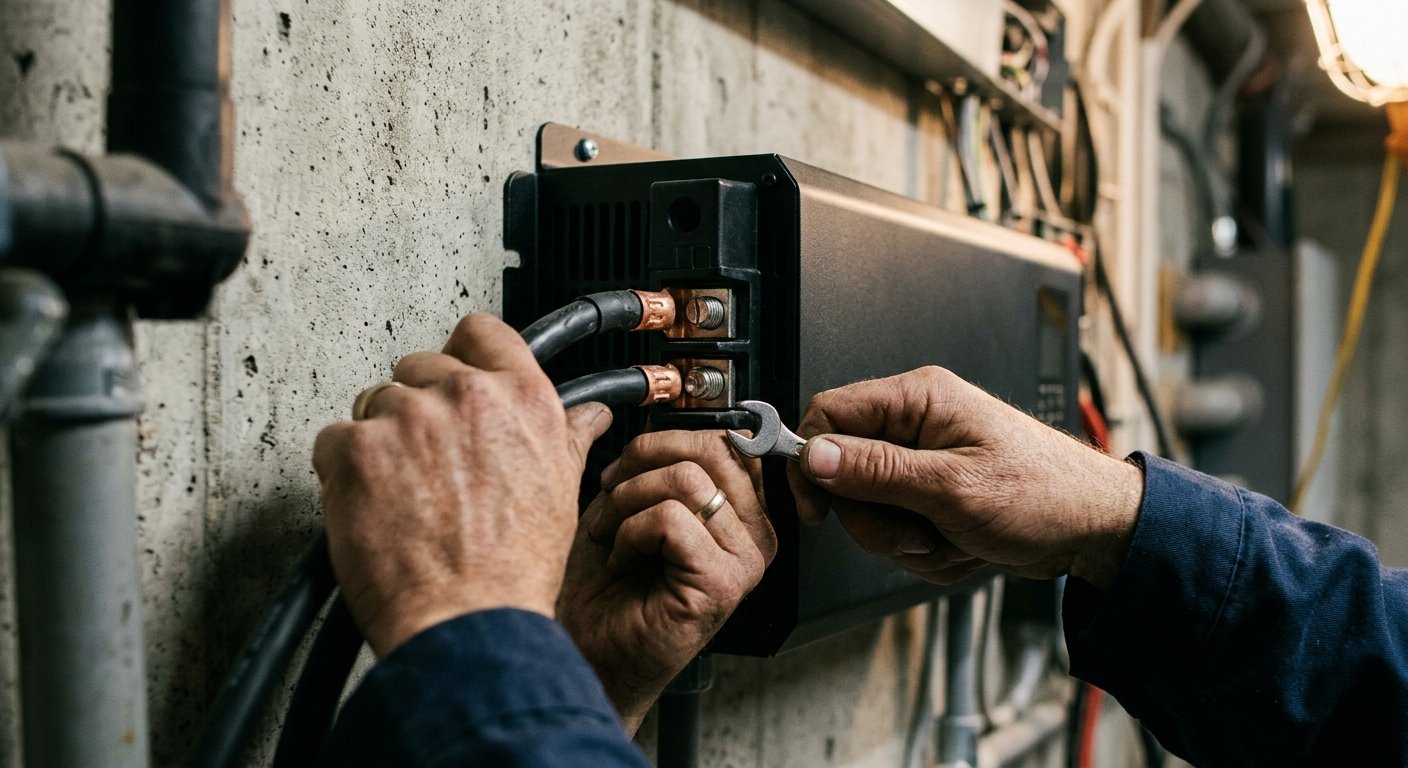
The term “hybrid solar system” refers to a solar array connected to both a battery bank and the utility grid. During sunny hours, solar panels generate electricity that powers your business in real time. Surplus energy charges the battery bank rather than being wasted. At night or during a cloudy period, the battery discharges, covering your load before the grid is called upon. When the grid fails entirely, the system switches to battery-only mode—typically in milliseconds, fast enough that sensitive electronics barely notice.
This seamless switching is what separates a true hybrid solar system from a simple backup generator. Generators require manual startup, produce emissions, need regular fuel deliveries, and often take 10–30 seconds to come online. Hybrid systems are silent, automatic, and already charged from the sun. The U.S. Department of Energy’s overview of solar energy storage explains how lithium-ion and other battery chemistries are now purpose-built for commercial discharge cycles, offering long service lives without the maintenance burden of older battery technologies.
Size your battery bank to cover your most critical loads—refrigeration, lighting, payment systems, and communications—rather than trying to back up every circuit. This approach reduces upfront cost while protecting the operations that matter most.
The Financial Case for Energy Storage Solutions
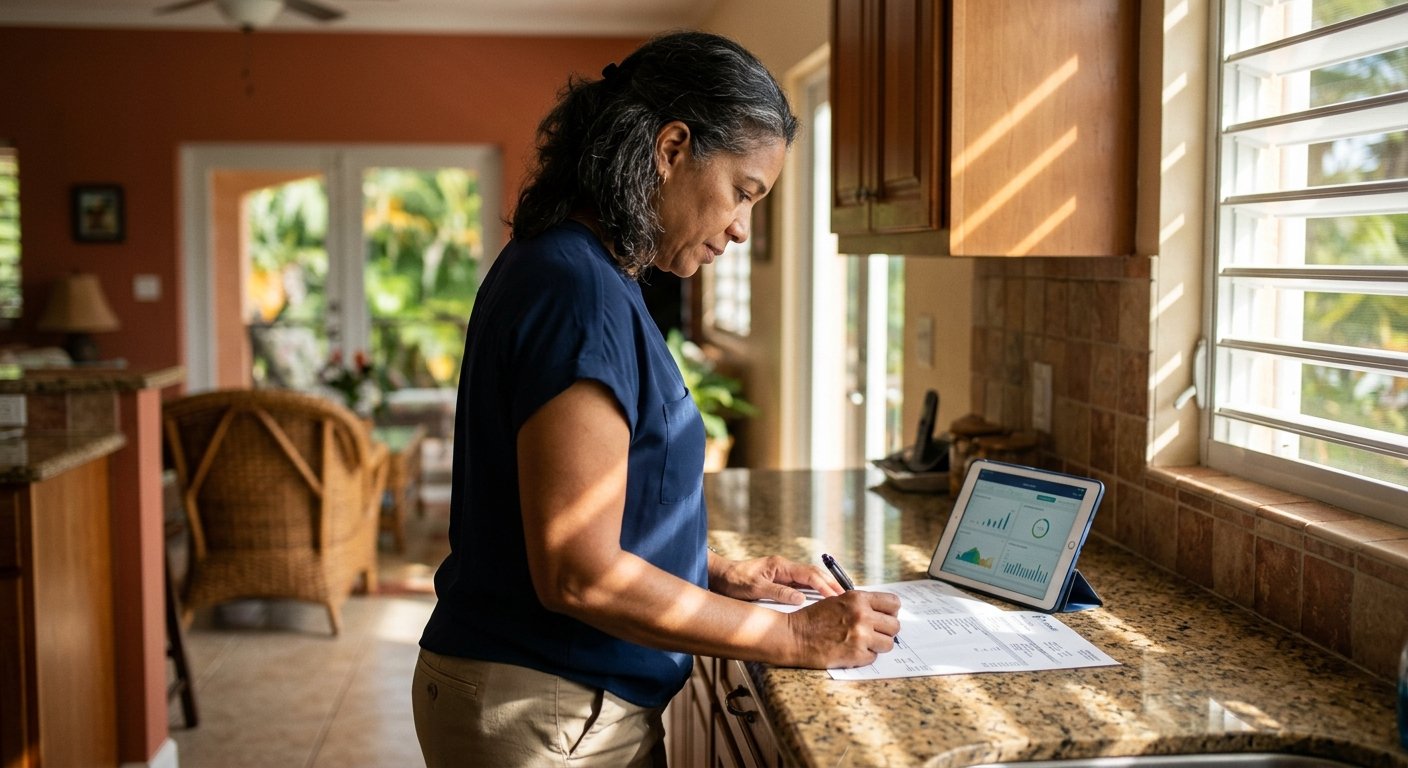
The business case for energy storage solutions in the Caribbean is compelling and specific. Aruba’s residential and commercial electricity rates are among the highest in the hemisphere, driven by the cost of imported fuel. When you generate and store your own solar energy, you are, in effect, locking in a lower energy cost for the life of the system—typically 25 years for panels and 10–15 years for battery modules.
Beyond bill reduction, there is a demand-charge dimension that most business owners underestimate. Utilities often bill commercial accounts not just for total energy consumed (kWh) but for peak demand (kW)—the highest spike of power drawn in any 15- or 30-minute interval. A battery system can “shave” these peaks by discharging during high-demand moments, flattening the load profile the meter sees and reducing the demand charge portion of the bill. Over a year, this can represent meaningful savings for restaurants, hotels, retail centers, and light manufacturing facilities.
Coastal Installation: What Aruba’s Environment Demands
Installing battery storage systems in a coastal tropical environment requires more than plugging in generic equipment. Salt air accelerates corrosion. UV exposure degrades casings and wiring. High ambient temperatures affect battery performance and longevity. These are realities that Caribbean solar energy specialists understand from experience—and they shape every installation decision.
At B Energy, our coastal installations use marine-grade conduit and connectors, corrosion-resistant mounting hardware, and battery enclosures rated for outdoor tropical environments. We also orient and shade battery banks to minimize heat buildup, since lithium battery performance and lifespan degrade when operating temperatures remain consistently high. The National Renewable Energy Laboratory’s solar cost and performance analysis confirms that installation quality—not just hardware selection—is one of the primary factors determining long-term system performance.
For businesses in Oranjestad and across Aruba, this means working with a team that knows local conditions on a neighborhood level: which sites face prevailing trade winds, which rooftops need additional structural assessment, and which commercial load profiles benefit most from a larger battery-to-panel ratio.
Island solar installations face unique challenges—salt spray, heat, and grid variability—that require locally tested solutions. Our community-focused solar approach means we design for Aruba’s specific conditions, not generic tropical averages.
Choosing the Right System Size for Your Business
Every business has a different energy fingerprint. A small retail shop in downtown Oranjestad will have very different needs from a beachside resort or a cold-storage distribution center. System sizing is where the expertise of a local Caribbean installer makes a real difference.
Energy Audit
We review 12 months of utility bills and conduct a site assessment to map your actual consumption patterns—peak hours, critical loads, and seasonal variation.
Load Prioritization
Together, we identify which circuits are mission-critical and must stay powered during an outage versus which can safely go offline temporarily.
System Design
Our engineers design a solar-plus-storage system sized to your load—typically between 10 kWp and 100+ kWp for commercial applications—with the right battery capacity to cover your critical runtime.
Installation & Commissioning
Certified technicians handle the full installation, including coastal-grade hardware, grid interconnection, and final system testing under real operating conditions.
Monitoring & Support
Remote monitoring lets us track system performance and flag any issues before they affect your operations—proactive care, not reactive repairs.
Solar Battery Storage and Community Resilience
When businesses invest in solar battery storage in the Caribbean, the benefits ripple outward. An Oranjestad grocery store that stays open during a grid interruption becomes a community anchor. A hotel that keeps its lights on provides safety and stability to guests and staff alike. A clinic with battery backup continues delivering care when it matters most.
This is the dimension of solar-plus-storage that numbers alone cannot fully capture. Aruba is a community, not just a market. When local businesses achieve genuine energy independence, the entire island becomes more resilient—economically, socially, and environmentally. Reducing dependence on imported fossil fuels also means less carbon per kilowatt-hour generated, contributing to the broader sustainability goals that Aruba has committed to as a small island developing state. The International Renewable Energy Agency’s work on island energy transitions highlights exactly this pattern: islands that adopt distributed solar-plus-storage see compounding benefits that extend well beyond individual electricity bills.
Explore how B Energy’s commercial solar solutions are designed to deliver these broader benefits alongside strong financial returns. For businesses ready to take the first step, our residential solar systems page offers an accessible starting point for understanding the fundamentals—and our dedicated battery storage and hybrid energy resource dives deep into the technical options available today.
Frequently Asked Questions
How long will a battery system keep my business running during an outage?
Runtime depends on your battery capacity and the loads you are running. A well-sized system can cover critical operations—refrigeration, lighting, and payment terminals—for anywhere from several hours to a full day. During a grid interruption, the solar panels continue charging the battery if sunlight is available, extending runtime significantly.
Is battery storage worth the additional investment over solar panels alone?
For businesses in Aruba where grid reliability is variable and electricity costs are high, the combination of solar-plus-storage typically delivers faster ROI than solar alone when you factor in demand charge reduction and the avoided cost of downtime. The 3–5 year payback estimate accounts for both components as a system.
What happens to the battery system at the end of its life?
Modern lithium-ion battery modules have expected service lives of 10–15 years before capacity drops to the point of replacement. Battery manufacturers increasingly offer take-back and recycling programs. When replacement time comes, the solar array itself—with a 25-year lifespan—typically remains fully functional, so only the battery modules need upgrading.
Can energy storage solutions be added to an existing solar installation?
Yes. If your existing solar system uses a compatible inverter architecture, battery storage can often be retrofitted. Our team assesses existing systems to determine the best integration path—sometimes a new hybrid inverter is required, but the solar panels themselves almost always remain usable.
Does B Energy handle the grid interconnection permits in Aruba?
Yes. As Caribbean solar energy specialists with local island expertise, we manage the full permitting and utility interconnection process in Oranjestad on behalf of our commercial clients, reducing the administrative burden on your team.
Ready to protect your business from the next outage?
Our team of Caribbean solar energy specialists will assess your Oranjestad business, design a system sized to your actual needs, and walk you through a clear ROI projection—no obligation, no pressure.

About B Energy
B Energy is a mission-driven solar energy company serving Caribbean homeowners and businesses in Aruba and surrounding islands. We specialize in designing and installing residential and commercial solar systems (5-100+ kWp) optimized for tropical climates, coastal environments, and hurricane resilience. Our community-focused approach combines a typical 3-5 year payback, energy independence solutions, and environmental stewardship, empowering island residents to lower electricity costs while contributing to a sustainable Caribbean future. Visit b-energy.life →