
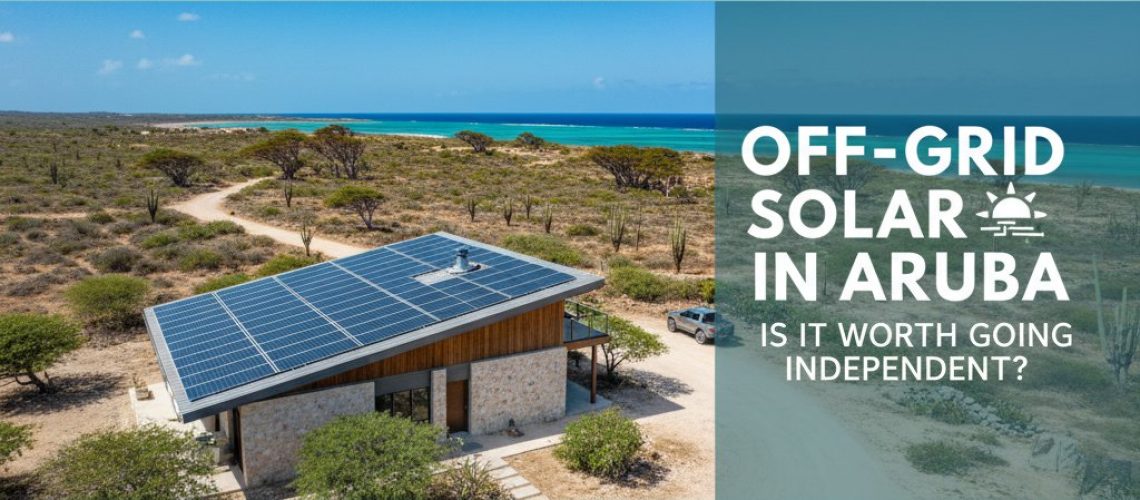
Picture waking up to brilliant Caribbean sunshine, knowing your home runs entirely on your own power. No monthly electricity bills. No concerns about grid outages. Complete control over your energy future. For Aruban homeowners and businesses tired of high utility costs, off-grid solar represents the ultimate freedom—but is complete energy independence the right choice for your property?
The answer depends on your location, energy needs, and long-term vision. While off-grid solar offers unparalleled independence, it requires careful planning and realistic expectations about costs and lifestyle adjustments. Understanding the true picture helps you make the smartest investment for your island home or business.
Understanding Off-Grid Solar Systems in Aruba
An off-grid solar system operates completely independently from Aruba‘s electrical grid. Unlike grid-tied systems that remain connected to utility power, standalone solar systems generate, store, and manage all your electricity needs without any connection to the public network.
These complete systems include solar panels to capture sunlight, battery banks to store energy for nighttime and cloudy periods, charge controllers to manage battery health, and inverters to convert stored DC power into usable AC electricity for your appliances. Every component works together to create a self-sufficient power ecosystem.
For Aruban properties in remote locations or those seeking absolute independence from utility companies, off-grid solar transforms energy from a monthly expense into a long-term investment in autonomy. The question becomes whether this independence aligns with your practical needs and budget.
The True Cost of Complete Energy Independence
Off-grid solar systems require significantly higher upfront investment than grid-tied alternatives. Where a grid-connected residential system might cost $15,000-$25,000 for a typical Aruban home, complete off-grid installations typically range from $30,000-$60,000 or more, depending on energy consumption and desired backup capacity.
The primary cost driver? Battery storage. Quality lithium-ion battery banks capable of powering a home through several days without sunshine represent 40-50% of total system costs. A family home requiring 30-40 kWh of daily storage might need $15,000-$25,000 in batteries alone—and these components require replacement every 10-15 years.
Additional expenses include:
- Larger solar array to charge batteries and power daytime loads simultaneously
- Specialized inverters rated for battery-based operation
- Charge controllers to protect battery longevity
- Enhanced mounting systems rated for higher panel counts
- Generator backup for extended low-sun periods
- Professional system design and monitoring equipment
However, comparing off-grid solar costs against decades of zero electricity bills reveals impressive long-term value. With Aruba’s electricity rates among the Caribbean’s highest, a properly designed off-grid system typically achieves return on investment within 5-7 years, then provides essentially free power for the system’s 25+ year lifespan.
Using an Off-Grid Solar Calculator
Accurate off-grid solar design starts with understanding your true energy consumption. Calculate your daily kilowatt-hour usage by reviewing several months of electricity bills or conducting a detailed appliance audit. Factor in seasonal variations and future growth—many homeowners underestimate actual needs, leading to undersized systems and frustration.
A comprehensive off-grid solar calculator considers:
- Average daily energy consumption in kWh
- Days of battery autonomy desired (typically 2-4 days in Aruba)
- Solar panel output based on Aruba’s excellent sun exposure
- System losses from heat, inefficiency, and battery charging
- Surge capacity for starting motors and large appliances
Most Aruban homes consume 20-35 kWh daily, requiring solar arrays of 8-15 kWp paired with substantial battery capacity. Businesses with higher consumption may need 20-100+ kWp systems with proportionally larger storage—making professional design consultation essential for commercial applications.
Who Benefits Most from Off-Grid Solar in Aruba
Complete energy independence makes compelling sense for specific situations. Remote properties where grid connection costs exceed off-grid system investment represent ideal candidates. If extending utility lines to your land parcel costs $40,000-$80,000, investing that amount in standalone solar systems provides immediate value while eliminating future monthly bills.
Environmentally committed homeowners willing to adapt consumption habits around solar production find deep satisfaction in off-grid living. Knowing every light switch, air conditioner, and appliance runs on clean Caribbean sunshine creates meaningful connection to sustainability values. This lifestyle appeals to those who prioritize environmental stewardship over convenience.
Properties with specific energy security concerns—whether medical equipment requiring uninterrupted power or businesses where outages create significant financial losses—benefit from off-grid reliability. While Aruba’s grid proves generally stable, complete independence eliminates any vulnerability to utility disruptions.
When Grid-Tied Solar Makes More Sense
For most Aruban homeowners and businesses, grid-tied solar with battery backup offers better value than complete off-grid systems. These hybrid approaches maintain grid connection while generating most power from solar, storing excess in batteries for nighttime use, and relying on utility power only when necessary.
Grid-tied systems cost 30-50% less than equivalent off-grid installations because they require smaller battery banks. The grid acts as unlimited backup, eliminating anxiety about extended cloudy periods or unexpected energy spikes. You enjoy dramatic bill reductions—often 80-95%—without the constraints of standalone systems.
Businesses particularly benefit from grid-tied approaches. Commercial operations rarely want energy limitations affecting operations. Maintaining grid connection provides flexibility for growth, special events, or seasonal demand variations while still capturing solar’s impressive financial returns.
Designing Effective Off-Grid Solar Systems
Successful off-grid solar design balances adequate capacity with realistic budgets. Oversizing systems wastes investment capital, while undersized installations create constant frustration. The goal? Right-sized solutions matching your actual lifestyle and energy patterns.
Start by identifying essential versus discretionary loads. Which appliances absolutely must run 24/7? What consumption can shift to peak solar production hours? Energy-efficient appliances dramatically reduce required system size—replacing older air conditioners, refrigerators, and water heaters with modern efficient models often cuts needed capacity by 30-40%.
Smart off-grid design incorporates:
- LED lighting throughout (minimal power draw)
- Energy Star appliances and high-efficiency air conditioning
- Solar water heating to reduce electrical loads
- Propane for cooking and clothes drying when practical
- Monitoring systems tracking production and consumption
- Battery management strategies maximizing storage lifespan
Coastal Aruba properties require specialized installation considerations. Marine environments accelerate corrosion on electrical connections and mounting hardware. Quality stainless steel components, proper sealing of all junction boxes, and elevated battery placement away from salt spray protect your investment for decades of reliable service.
Living Off-Grid: Lifestyle Considerations
Off-grid solar creates a different relationship with energy. Instead of unlimited power on-demand, you develop awareness of consumption patterns and weather conditions. Cloudy days mean postponing heavy loads or running a backup generator. This mindful approach to energy feels liberating to some, restrictive to others.
Fortunately, Aruba’s consistent sunshine makes off-grid living easier than many locations. The island averages 300+ sunny days annually with strong solar irradiance year-round. Unlike temperate climates where winter solar production drops dramatically, Aruban systems maintain relatively consistent output throughout the year.
Most off-grid homeowners quickly adapt daily routines to solar abundance. Running washing machines, pool pumps, and other heavy loads during peak afternoon solar production becomes second nature. This alignment with natural energy rhythms often brings unexpected satisfaction—living in harmony with sunshine rather than fighting against it.
Backup Generators and Hybrid Solutions
Even well-designed off-grid systems benefit from backup generator integration. A properly sized propane or diesel generator provides insurance against unexpected situations—extended cloudy periods, equipment maintenance, or temporarily increased consumption from visiting family.
Modern hybrid inverters seamlessly integrate generators into off-grid solar systems. When battery levels drop below programmed thresholds, generators automatically start, power essential loads, and recharge batteries—then shut down once adequate charge is restored. This automation provides peace of mind without daily management.
Budget approximately $3,000-$8,000 for quality backup generators sized to your needs. While this adds upfront cost, generators dramatically enhance system reliability and reduce required battery capacity, often creating net savings in overall system design.
Frequently Asked Questions
How long do off-grid solar batteries last in Aruba?
Quality lithium-ion batteries typically last 10-15 years in Aruba’s climate with proper management. Heat represents the primary longevity challenge—installing batteries in shaded, ventilated spaces away from direct sun exposure significantly extends lifespan. Advanced battery management systems included in quality inverters protect against overcharging and deep discharge, maximizing cycle life.
Can I switch from off-grid to grid-tied solar later?
Yes, though it requires new equipment. Off-grid inverters differ from grid-tied models, so transitioning means replacing your inverter system. However, solar panels and mounting hardware remain usable. Many property owners who initially install off-grid systems due to lack of grid access later convert to hybrid grid-tied approaches when utility lines reach their area.
What size off-grid solar system does a typical Aruban home need?
Most Aruban homes require 8-15 kWp solar arrays paired with 30-50 kWh battery capacity for comfortable off-grid living. Exact sizing depends on air conditioning usage, number of occupants, and lifestyle preferences. Professional energy audits identify your specific requirements, preventing costly over or under-sizing.
Your Path to Energy Independence
Off-grid solar in Aruba offers genuine energy independence for those willing to embrace its requirements and investment. The freedom from monthly utility bills, satisfaction of complete self-sufficiency, and pride in sustainable living create rewards beyond financial returns alone.
Yet for many island homeowners and businesses, grid-tied solar with battery backup delivers better value—capturing 90%+ of financial benefits at significantly lower cost while maintaining grid reliability as backup. The best choice depends on your unique situation, location, values, and long-term vision.
Whether pursuing complete independence or strategic grid connection, Aruba’s abundant sunshine makes solar energy an exceptional investment in your property’s future and our island’s sustainable development. Every kilowatt-hour generated from Caribbean sun represents progress toward energy security, environmental stewardship, and thriving communities powered by renewable resources.
Ready to explore off-grid solar possibilities for your Aruba property? Professional consultation ensures your system matches your specific needs, budget, and goals—transforming sunshine into decades of reliable, independent power that elevates your quality of life while contributing to our island’s sustainable future.