
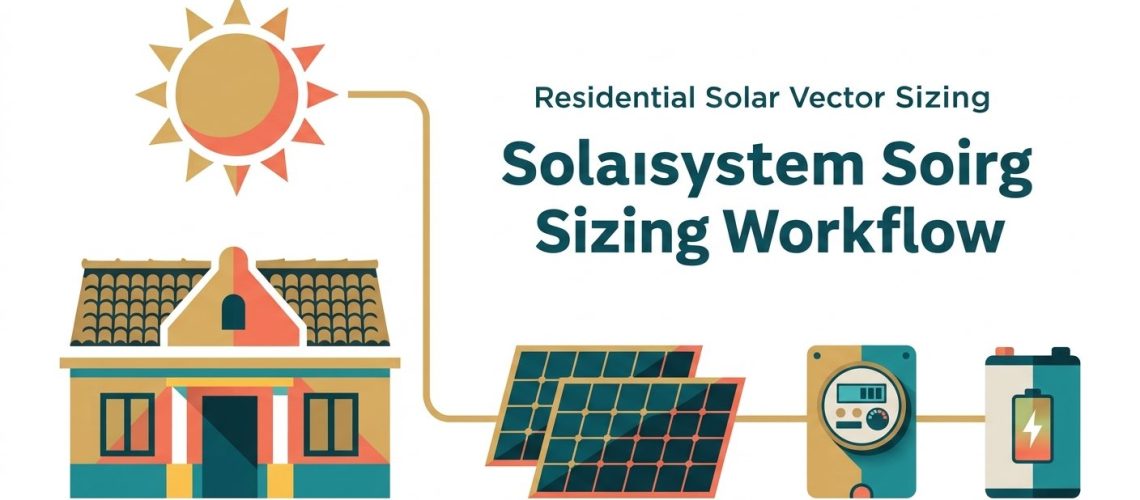
Sizing a residential solar system in Aruba means matching your home’s daily energy consumption to the island’s available sunlight and choosing enough panel capacity to reliably cover that demand. For most Aruban homes, this results in systems between 5 and 15 kWp — though the right size depends on your electricity bills, appliance use, and whether you want to stay grid-tied or move toward energy independence.
- Start with your monthly kWh consumption from your WEB Aruba utility bills — this is your most important input.
- Aruba receives roughly 5.5 to 6 peak sun hours per day, one of the Caribbean’s strongest solar resources.
- Most Aruban family homes fit a 5–15 kWp system; larger properties or businesses may need 20–100+ kWp.
- Oversizing slightly (10–15%) accounts for real-world efficiency losses from heat, wiring, and inverter conversion.
- A properly sized system in Aruba typically delivers a 3–5 year payback period on your investment.
Why Getting the Size Right Matters
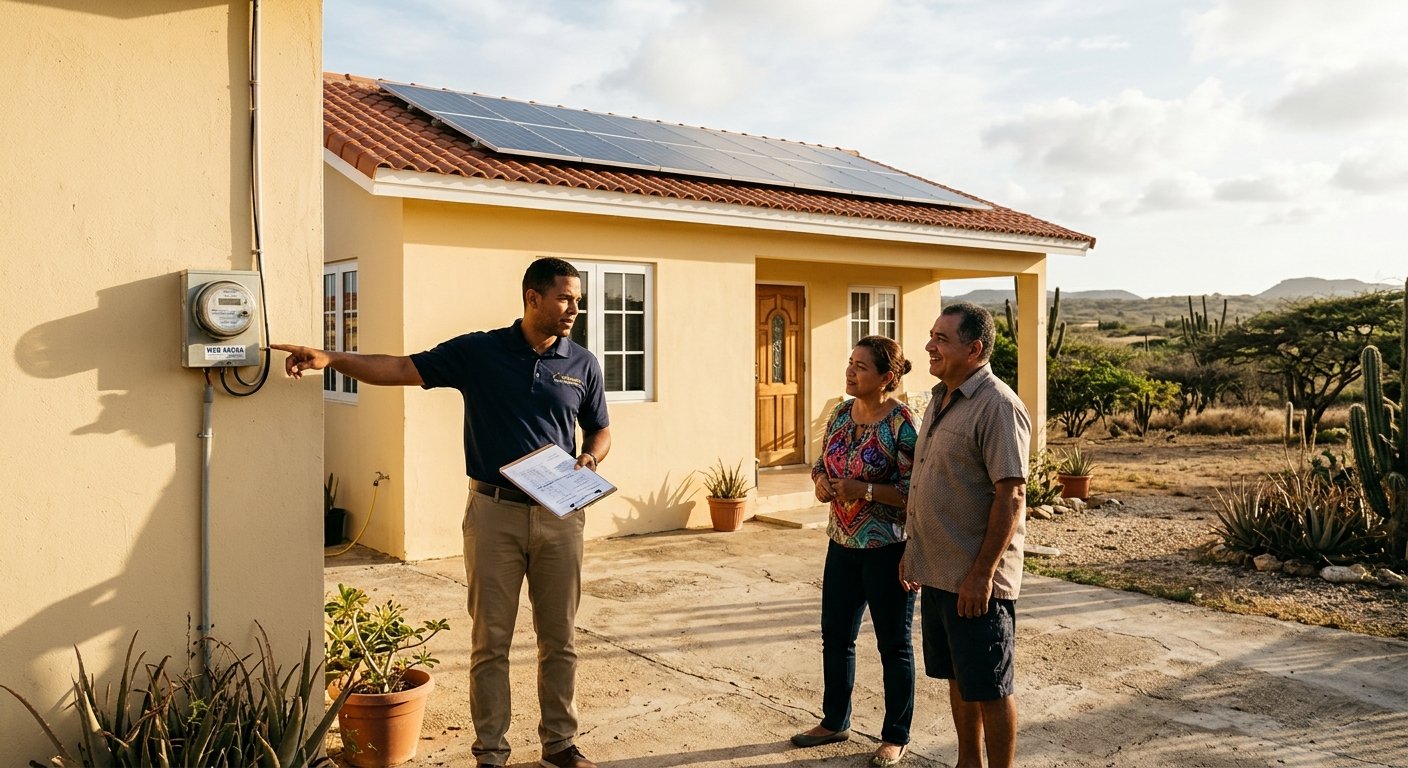
A system that’s too small will leave you pulling expensive grid electricity every day. A system that’s too large wastes capital on panels you don’t need. Neither outcome serves you well. Sizing correctly is the foundation of a smart home solar installation in Aruba — and it’s the step that separates a system that truly transforms your monthly bills from one that merely chips away at them.
The good news: Aruba’s consistent sunshine and predictable energy patterns make sizing more straightforward than in many other places. Once you understand the four core inputs — your consumption, Aruba’s solar resource, panel output, and system losses — the math becomes clear and empowering.
The right solar system size isn’t about panels on a roof — it’s about matching the sun’s gift to your household’s real needs.
Step 1: Understand Your Energy Consumption
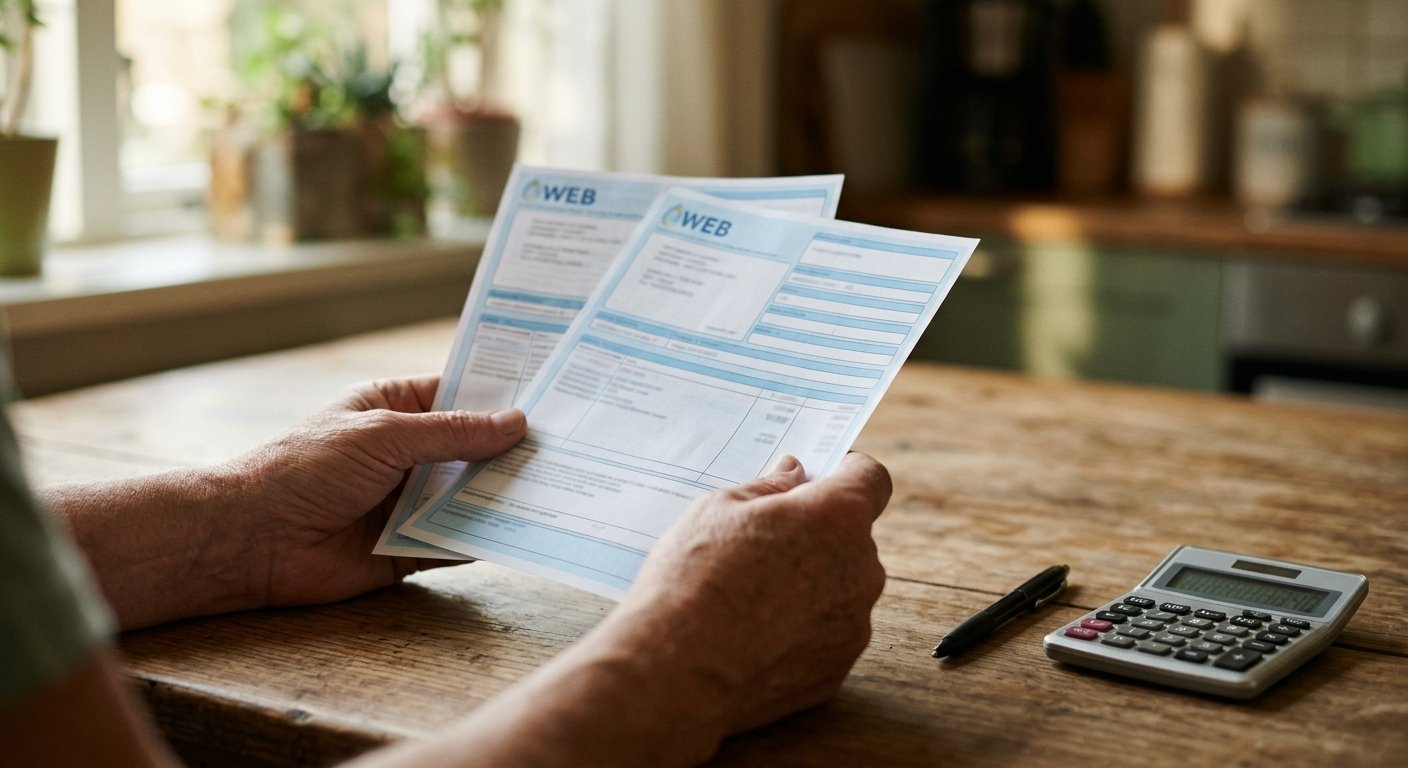
Pull out your last three to six months of WEB Aruba electricity bills. You’re looking for your monthly kilowatt-hour (kWh) usage. Add those months together and divide by the number of months to get your average monthly consumption. Then divide by 30 to find your daily kWh demand.
As a practical reference (this is an illustrative example, not a guaranteed figure): a typical Aruban household running central air conditioning, a refrigerator, washing machine, water heater, and standard lighting might consume between 600 and 1,000 kWh per month. Homes with multiple AC units or pool pumps will sit higher. This number is your anchor for everything that follows.
If your bills fluctuate seasonally, use the highest month as your baseline. Sizing to your peak demand ensures your system covers you year-round, not just in the quieter months.
Step 2: Know Aruba’s Solar Resource
Aruba sits at approximately 12° North latitude, well within the tropics, giving it exceptional year-round solar radiation. According to data from the Global Solar Atlas, Aruba receives a daily average of roughly 5.5 to 6 peak sun hours (PSH) — a measure of how many hours per day the sun delivers energy equivalent to 1,000 watts per square metre. This is significantly higher than most of Europe and comparable to the sunniest regions in the world.
What this means in practice: each kilowatt (kW) of installed solar capacity generates approximately 5 to 5.5 kWh of electricity per day under real-world conditions. This predictability is one of the strongest arguments for solar power for Caribbean homes — the sun shows up reliably, day after day.
Step 3: Calculate Your Required System Size
The core sizing formula is straightforward:
System size (kWp) = Daily energy need (kWh) ÷ Peak sun hours × Efficiency factor
The efficiency factor accounts for real-world losses. Even the best solar systems lose energy to heat (solar panels produce less power as temperatures rise), inverter conversion, wiring resistance, and dust on panels. A standard efficiency factor for Aruba’s tropical conditions is 0.80 (representing approximately 20% system losses).
Find your daily kWh need
Divide your average monthly kWh from your WEB bill by 30. Example: 750 kWh ÷ 30 = 25 kWh/day.
Divide by peak sun hours
Using Aruba’s average of 5.5 PSH: 25 kWh ÷ 5.5 = 4.55 kW (ideal output needed).
Apply the efficiency factor
Divide by 0.80 to account for system losses: 4.55 ÷ 0.80 = approximately 5.7 kWp. Round up to the next standard system size — in this example, a 6 kWp system.
Convert to number of panels
Divide your system size by the wattage of a single panel. With modern 400W panels: 6,000W ÷ 400W = 15 panels.
This example produces a 6 kWp system for a home using 750 kWh per month — a very common outcome for mid-sized Aruban households. Larger homes consuming 1,200–1,500 kWh/month would typically require 10–15 kWp systems. For businesses and commercial properties, B Energy designs and installs Caribbean home solar systems and commercial arrays scaling from 20 kWp up to 100 kWp and beyond. Explore our commercial solar solutions if you’re sizing for a business.
Step 4: Account for Roof Space and Orientation
Panel count determines roof space. A modern 400W panel occupies roughly 2 square metres. A 15-panel, 6 kWp system needs approximately 30 square metres of usable roof area. In Aruba, the optimal roof orientation faces south or west — south-facing roofs capture the most total daily energy, while west-facing arrays can be strategically advantageous for capturing afternoon peak hours when household demand is typically highest.
Shading is a critical factor. Even partial shading from a tree, satellite dish, or neighbouring structure can significantly reduce output. A proper site assessment identifies shading risks and helps determine whether microinverters or power optimisers make sense for your roof’s specific conditions.
Aruba’s coastal salt air is a real consideration for equipment selection. Panels, mounting hardware, and inverters specified for marine environments use corrosion-resistant materials that hold up over decades. This is one reason local Caribbean expertise matters — equipment choices that work inland don’t always perform the same near the ocean.
Common Sizing Mistakes to Avoid
Even motivated homeowners make sizing errors that cost them in the long run. Here are the most frequent ones:
- Sizing to today’s consumption only. If you’re planning to add an EV, a pool, or more AC units in the next few years, size for future demand. Adding panels later is more expensive than getting it right the first time.
- Ignoring system losses. Skipping the efficiency factor and assuming panels produce their rated wattage in real conditions leads to chronic under-production.
- Choosing the cheapest inverter. The inverter converts your panels’ DC power into usable AC electricity. An undersized or low-quality inverter becomes a bottleneck that limits your whole system’s output.
- Not comparing system size to WEB Aruba’s net metering terms. Understanding how excess energy is credited matters for optimising your system size relative to what you can actually recoup. The WEB Aruba utility governs grid interconnection policies on the island.
To dig deeper into what affects your actual savings beyond system size, this guide on solar energy savings in Aruba covers factors many installers don’t discuss upfront.
| Home profile | Typical consumption | Suggested system size |
|---|---|---|
| Small home / apartment | 300–500 kWh/month | 3–5 kWp |
| Mid-size family home | 600–900 kWh/month | 6–10 kWp |
| Large home / high AC use | 1,000–1,500 kWh/month | 10–15 kWp |
| Small business / office | 2,000–4,000 kWh/month | 20–40 kWp |
These ranges are illustrative examples to help you orient your expectations. Your actual system size requires a professional assessment of your specific bills, roof, and goals.
The ROI Connection: Why Sizing Correctly Accelerates Payback
A correctly sized system maximises the financial logic of going solar. At B Energy, our residential solar installations in Aruba typically deliver a 3–5 year payback period — meaning your system pays for itself through energy savings within that window and then continues generating value for decades. Oversizing wastes capital; undersizing stretches your payback because you’re still buying significant grid power. Getting the size right is, in that sense, the single most important financial decision in your solar journey.
You can estimate your potential savings before committing by using our Solar Energy Savings Calculator for the ABC Islands — it’s built specifically for Aruban electricity rates and solar conditions.
For homeowners considering whether a battery backup or off-grid configuration might better suit their needs, our off-grid solar design guide for Aruba homes walks through the additional sizing considerations those systems require.
The International Renewable Energy Agency consistently highlights the Caribbean’s exceptional solar potential as an opportunity to reduce dependence on imported fossil fuels — and Aruba is well-positioned to lead that transition, home by home.
Frequently Asked Questions
How many solar panels does a typical Aruban home need?
Most mid-sized Aruban family homes require between 12 and 25 panels, depending on consumption and the wattage of the panels selected. Using modern 400W panels, a 6 kWp system needs 15 panels, while a 10 kWp system needs 25. The exact count always depends on your specific energy bills and roof conditions.
Can I size a system without seeing my electricity bills?
Your bills are the most reliable input — without them, any size estimate is a rough guess. If you’ve lost past bills, WEB Aruba can typically provide consumption history. Even three months of bills gives enough data for a solid initial estimate.
Does Aruba’s heat reduce solar panel output?
Yes — solar panels produce slightly less electricity as temperature rises above 25°C, which is a daily reality in Aruba. This is exactly why the efficiency factor (typically 0.80) is included in the sizing formula. Panels rated for high-temperature performance and proper roof mounting that allows airflow underneath help minimise this effect.
What system size do I need for energy independence?
Full energy independence typically requires a larger system paired with battery storage, allowing you to store daytime solar production for nighttime use. The solar array itself is sized the same way, but battery capacity adds another layer of calculation based on your nighttime consumption and desired backup hours. Our off-grid solar design service covers this in detail.
How long does a properly sized solar system last in Aruba?
Quality solar panels are built to perform for 25–30 years, with manufacturers typically warranting at least 80% output over that period. Inverters generally have a lifespan of 10–15 years. Proper equipment selection for coastal Caribbean conditions — corrosion-resistant hardware, marine-grade wiring — is essential to achieving that full lifespan.
Get a System Sized Specifically for Your Home
B Energy’s Caribbean solar specialists will analyse your actual consumption, assess your roof, and design a system built for Aruba’s sunshine and coastal conditions — with a clear ROI projection, no pressure.

About B Energy
B Energy is a mission-driven solar energy company serving Caribbean homeowners and businesses in Aruba and surrounding islands. We specialize in designing and installing residential and commercial solar systems (5-100+ kWp) optimized for tropical climates, coastal environments, and hurricane resilience. Our community-focused approach combines a typical 3-5 year payback, energy independence solutions, and environmental stewardship, empowering island residents to lower electricity costs while contributing to a sustainable Caribbean future. Visit b-energy.life →